Thursday, 11 March 2021

Feeding Station Ringing Session

Last weekend Alice and I had a ringing session at our feeding station in the Hodder Valley, and we were joined by Dan, who is one of the two Assistant Wardens on Fair Isle. Dan had joined us so I could support his application for a C permit. 

This will be a short post, as other than our ringing totals there is very little else to report. We ringed 37 birds as follows (recaptures in brackets):

Chaffinch - 13 (1)
Goldfinch - 2
Coal Tit - 3 (3)
Great Tit - 4(4)
Greenfinch - 2
Siskin - 1
Nuthatch - 2
Blue Tit - 10 (7) 
Robin - (1) 
 
Siskin
 
For most of the morning a Song Thrush was singing from the top of a favoured pine tree, and we also heard some sub-song from a Fieldfare. Two Mistle Thrushes made it a trio of Thrushes. Other calling birds included a Raven, two Great Spotted Woodpeckers and a couple of Siskins.
 
I was back at the feeding station yesterday morning in the heavy rain, on my way to a client's farm near Slaidburn, to complete what was quite literally a 'splash and dash'! The feeders were busy with the usual suspects including eleven Chaffinches, at least two Siskins, two Nuthatches and numerous Blue, Great and Coal Tits.
 
The forecast isn't looking great for this coming weekend, so I'll try and get a ringing session in during the week. 

Wednesday, 10 March 2021

A Tale of Two Marshes

At the end of last week, I found myself birding at two inland marshes; one as part of one of my wintering bird survey sites (marsh 10, and the other at my good friend's farm near Garstang (marsh 2). 
 
Marsh 1
 
Marsh 2
 

I was at my wintering bird survey site first thing in the morning, and I had full cloud cover with a light north-easterly wind. There seemed to be a number of Chaffinches around this morning, no obvious visible migration, but I recorded 20 in total, and these were mostly in the hedgerows. Also, in the hedges, were six Tree Sparrows, and I hadn't had any Tree Sparrows at this since late Autumn, so again I'm guessing they were migrants. 

Fieldfares were conspicuous by their absence, and I only had a single bird this week, but there was still a few Teal on the marsh, about 16 or so. There was a lot more on the other marsh, but more of that later. Good numbers of Mallards seemed to be everywhere, and there were gangs of males and females on the marsh, on shallow floods, and just generally in some of the arable fields, all full of the joys of spring. A look back in my notebook shows that I had 54 in total! 
 
A gang of amorous Mallards
 
There was a Water Rail still somewhere on the marsh, giving itself away by its call, and two Reed Buntings were singing from the dense vegetation. I was scanning across the marsh, and on the other side I noticed a large brown bird wandering around a field looking at the ground. And this large brown bird was a Buzzard, and these large raptors are partial to a few invertebrates, and this bird was probably looking for earthworms or something similar, digging them up with its powerful feet. 

I had two nice fly-over birds. The first being a Raven being mobbed by a Carrion Crow, and the second was a Great White Egret that flew over me when I was at my second VP and headed towards the marsh. Other fly-overs included 208 Pink-footed Geese and a male Sparrowhawk. The Great White Egret came right at the end of my survey period, and I headed off to my friend's marsh near Garstang.
 
Pink-footed Geese
 
There were a lot more wildfowl on this marsh, and I had 250 Teal, four Pintails (a good inland record), 49 Wigeon and twelve Shovelers. I had a look along the hedgerows and in the woodland, and recorded the usual suspects Robins, Great Tits, Blackbirds etc, and in a fairly wet field I had a flock of 12 Fieldfares and 10 Redwings. These Viking invaders will have been feeding on invertebrates brought to the surface by the wet conditions. 

So, a pleasant day in all, at two inland, but quite different wetlands!

Thursday, 4 March 2021

Boxes Again

Gail and I headed to our nest box scheme for Pied Flycatchers in the Hodder Valley this morning. Before we headed off into the woods with ladder, boxes and tools, we had a beautiful Stoat in full ermine! It was completely white, with just a black tip to its tail. A few weeks ago, in another bit of woodland, at this same site, we had a Stoat in partial ermine; stunning to see. 

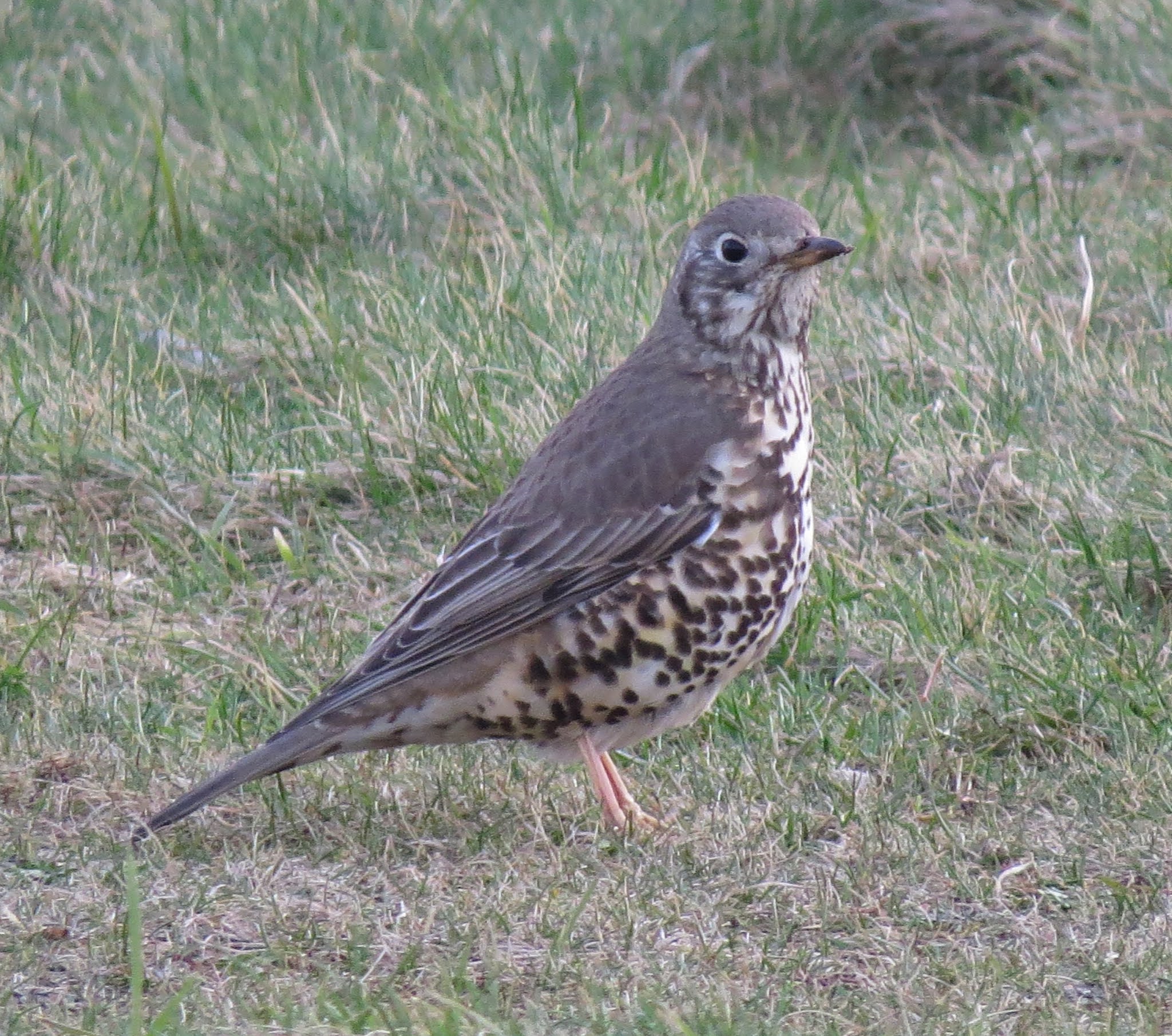
As we headed off into the woodland, we were accompanied by calling Nuthatches and a Mistle Thrush in full song. So loud, and vibrant, but at the same time with a liquid quality, as if its song was cascading from the top of the tree it was singing from.
 
Mistle Thrush
 
Two Buzzards were displaying above the woodland, and a pair of Curlews across the river joined in with all the spring joyousness and enthralled us with their bubbling display flight. 
 
Buzzard
 
We replaced seven dilapidated boxes, and put one extra up, taking the total number of boxes here to 42. It won't be long now before the Pied Flycatchers land on our shores from Africa. I can't wait! 

My lovely assistant and other half, Gail. I didn't
really let her carry the ladder and boxes!
 
Pied Flycatcher. Coming soon to an upland Oak wood near you.


Wednesday, 3 March 2021

Avocets, Boxes and Peckers

What a busy couple of weeks it's been, with lots of wintering bird survey work, nest box building and erection, and March is shaping up to be a busy month too! I'm not complaining, as you can't beat spending time out in the great outdoors. 

About a week ago I was at my site with some freshwater marsh, and it was cold and blustery; full cloud cover with a 20-25 mph south-easterly wind. Now, vantage points do what they say on the tin, and by name and nature, they are an observation point that gives a good vantage over the area that you are surveying, and as such tend to be exposed and cold! And my two VPs at this site were very cold on this particular morning. 

The last time I was here, I had a number of Fieldfares and that hadn't changed with 89 feeding in some arable fields. You wouldn't know they were there unless they flew, and because of the blustery conditions, even then they were sticking low to the ground. Talking of sticking low to the ground, I had a Little Egret that popped up out of a ditch and it flew away low to the ground, but the one I had before that, was flying fairly high over the marsh, before disappearing out of sight to the south. 

The only species that seemed to be enjoying the blustery conditions were a couple of Buzzards that were flying backwards and forwards and interacting with each other. They weren't quite displaying, but there were lots of calling to each other. 

Ten Teal were on the marsh, and they had been joined by three Coots, a new species for me for the site. There were lots of Gulls moving south, and I haven't put the counts in my notebook, although they are on a spreadsheet of results, and what was notable was the number of Lesser Black-backed and Common Gulls, a sure sign of spring. Another sure sign of spring was a Shelduck over, and when you start seeing them inland you know it's spring.
 
The middle of last week found me surveying at my site on the Humber Estuary. I had six oktas cloud cover, with a light south-westerly wind. Depending on what I'm doing and where I am, I take either my steel tripod (heavy, but sturdy; good for seawatching) or my carbon fibre pod (light and fits in my rucksack), and at this site I use my carbon fibre as I can carry it in my rucksack along with my scope. I was at my VP counting the waders on the estuary, when the 'head' seized on me and it wouldn't turn either way. Luckily, I had nearly finished, and I managed to unscrew it slightly from the tripod so I
 could at least get some movement. I would have been annoyed if this had happened earlier on! I now have a new head for my tripod. 
 
Amongst all the waders on the shore I picked out a group of three Avocets, and they looked odd amongst throngs of Godwits. Talking of waders, I had a single Ringed Plover, 97 Dunlin, 525 Black-tailed Godwits, ten Bar-tailed Godwits, 72 Curlews and four Redshanks. Associated with the feeding waders were 80 Shelducks.    

Walking through the areas of scrub and rank grassland to my VP, I had six Roe Deer. One of them hadn't seen me, and walked past me fairly close. I managed to photograph it, but when I looked at the results, I'd managed to capture it with stems of dead grass in front of its face, as you'll see below!
 
Roe Deer
 
Two Buzzards were active in this area, as were two Skylarks, five Long-tailed Tits, 22 Linnets, a male Yellowhammer and seven Reed Buntings.

I even had a bit of vis in the form of 120 Pink-footed Geese and 18 Woodpigeons, all heading northwest. 

Lat Friday, I spent a pleasant day at my good friends Robert and Diana's farm near Garstang. The aim of the day was to help Robert put some boxes up, but to be fair it was Robert who did most of the work! We replaced the Kestrel box in the wood that has been used annually for several years now, put up a Little Owl box and several Tree Sparrow boxes. 
 
Kestrel box
 
Little Owl box
 

We put boxes up mainly on mature trees in hedgerows and in the woodland, so we were wandering about a bit, and as a result recorded a few birds. It was a gloriously warm day for late February, with virtually no wind and full sun. 

A few birds were taking advantage of the clear conditions including 130 Pink-footed Geese that headed high northwest and three Skylarks that headed southwest. A pair of Buzzards were displaying with the usual climb and stall with folded wings. The male was also gliding slowly, and calling, with its legs pulled fully forward as if it was going to land, or using them as some kind of air brake; fabulous stuff.

A Woodcock and a Great Spotted Woodpecker put an appearance in the woodland, but it was the wetland that provided the greatest spectacle. We had noticed that the wildfowl kept on getting up, and generally looked very nervous, and at first, we thought it was us that was spooking them, but then the reason flew into view, a fantastic adult female Marsh Harrier! It flew round a couple of times before heading off north. Funnily enough, we had seen the wildfowl wheeling round earlier from a distance, and I wouldn't mind guessing that it was the Marsh Harrier causing it. Our estimate of the number of wildfowl included 29 Shovelers, 400 Teal and 80 Wigeon. Not a bad count!
 
Over weekend, I continued with the nest box theme, and Gail and I made eight boxes as replacements for dilapidated Pied Flycatcher boxes at our nest box scheme in the Hodder Valley. We have put aside tomorrow to go and out them up, and make sure that all the others are in tip-top condition, ready for the arrival of Pied Flycatchers!
 
Pied Flycatcher boxes
 
Whilst we were out in the garden working on the boxes, I could hear a Med. Gull calling, and looked up to see an adult winter bird circling round calling away. However, I was sure I could hear another, and sure enough an adult in summer plumage flew into view, and both flew round calling before heading off. I have mentioned on here in the past that I have had a Med Gull wintering in the vicinity of my house for a few winters, and maybe there has been more than one in the past, and it has been different birds that I have been seeing. Whatever it is, they're stonking birds though!
 
Alice and I also had a ringing session at our Hodder Valley feeding station and we managed to ring 31 birds as follows (recaptures in brackets):
 
Blue Tit - 11 (2)
Great Tit - 8 (3)
Chaffinch - 5
Coal Tit - 3 (1)
Goldfinch - 1
Great Spotted Woodpecker - 2
Song Thrush - 1 
Nuthatch - (3)
 
Great Spotted Woodpecker
 
I'll finish with some interesting behaviour that I observed whilst out surveying this morning, well I thought it was interesting, and I'm pretty sure that I haven't observed it before. I was stood at my VP when I heard a Mistle Thrush singing, and it got closer and louder, and then the bird flew over me, whilst singing at the same time! A few minutes later it flew back over me, and again it was singing away. Amazing! 

Over on the right you will notice that I have updated the ringing totals for Fylde Ringing Group up until the end of February. Six new species were ringed for the year during February, and these were Tree Sparrow, Stonechat, Reed Bunting, Skylark, Great Spotted Woodpecker and Song Thrush.

Below you will find the top 4 ringed in February, and the top 5 'movers and shakers' for the year.

Top 4 Ringed in February

1. Linnet - 30
2. Great Tit - 14
3. Chaffinch - 13
    Blue Tit - 13

Top 5 Movers and Shakers

1. Linnet - 57 (same position)
2. Blue Tit - 31 (same position)
3. Great Tit - 23 (straight in)
4. Chaffinch - 20 (straight in)
5. Coal Tit - 13 (straight in)

Saturday, 20 February 2021

Two Hats To A Cap

First of all, I need to apologise for not posting for a while, but I have had some major computer issues. To cut a long story short, Windows 10 decided to corrupt itself, and my computer was with the repairers for four days, and I only got it back yesterday. But enough of my woes!

Metaphorically speaking, I often have to wear two hats, but when I was over on the east coast at my survey site on the Humber Estuary last week, I literally had to wear two hats as it was so cold! It was a glorious morning with clear skies, and a chilly easterly wind with plenty of lying snow. 

My transect route to my VP location takes me through what you would describe as 'habitat mosaic', with lots of scrub that will no doubt support a good breeding bird assemblage, and I look forward to completing breeding bird surveys here later in the year. I've mentioned before how you get quite attached to various survey sites, and even though you might only spend a year or less at these sites, they sort of get under your skin, and feel like a local, or not so local, patch. As I walked through the scrub, I saw a flash of pink and a white rump, and there was a cracking male Bullfinch. And another white rump, and the female popped up. Not rare or even scarce birds, but I hadn't seen them here before, so that made them special. 
 
Habitat mosaic in the snow
 
I love the contrast of the green and yellow of the Gorse,
with the white of the snow
 
My VP in the distance next to the lone tree
 
My VP set up overlooking the estuary
 

Other species in and around the scrub were four Skylarks, eight Meadow Pipits, a Yellowhammer and two Reed Buntings. Walking towards my VP across some rank grassland with scattered Hawthorn scrub, with some small wet flashes, I flushed a Jack Snipe. And again, a new bird for the site. Or should I say a new bird for me at the site, as I am sure that Jack Snipes have been wintering here for many years. 
 
A distant Yellowhammer
 
I set up at my VP overlooking s stretch of the estuary and I started to count; 122 Shelducks, a Golden Plover, a Grey Plover, 79 Dunlin, 211 Black-tailed Godwits, 90 Bar-tailed Godwits, 48 Curlews, seven Redshanks, three Turnstones and 260 Black-headed Gulls. Looking downstream and beyond the area that I count, there were thousands of waders out on the mud, and I was quite happy that I wasn't counting them. 
 
Black-headed Gull
 
On my walk back to my car I encountered two Buzzards, and then I heard a rustle behind me, and on turning round two Roe Deer bucks ran past. 
 
Buzzard
 
Back in the west this week, I completed a survey at each of my two winter survey sites and the weather had warmed up, and I had switched from two hats to a cap! I started off at the site with an area of marsh, and just after first light a few Pink-footed Geese were on the move, and the 365 birds that I recorded were moving mainly north. 

The water levels were a little higher on the marsh than usual, and from my VP I could see over an area of relatively open water and counted eleven Teal and 20 Mallards. Usually, I just record Teal calling and have no idea how many there are. At least two Water Rails called from the marsh, as did a Reed Bunting.
 
On the arable field in front of me, I hadn't noticed the 57 Fieldfares that were foraging for invertebrates in the wet conditions until a Buzzard flew low over the field flushing them. Another Buzzard called from behind me, and a male Kestrel had a similar effect on these northern Thrushes. 
 
Walking to my second VP, I had a Grey Wagtail feeding around the edge of a flooded field corner, and close by a Little Egret popped out of a ditch and headed south and out of sight. 
 
Towards the end of the week, I was at my survey site virtually on the west coast. Again, it was mild with a stiff south-westerly wind and a few Pink-footed Geese headed north just after sunrise, and this time they numbered 187. I had a further seven Pink-footed Geese drop into the field that my second VP is located in, just as I was getting out of my car, and 174 in the fields to the west of my third VP.
 
Pink-footed Geese
 
I noticed a number of Song Thrushes in and around the area of scrub that forms part of my survey site, and I had three singing males, plus a further two individuals. A Little Egret made an appearance here too, and probably the highlight of the morning was the Woodcock that I flushed from the edge of the scrub. 
 
Restrictions have been relaxed by the BTO for carrying out surveys, or perhaps more accurately the guidance from the government is a little clearer, and survey work is allowed to continue during lockdown. We just need an improvement in the weather, and I should be able to do some ringing again.

Friday, 12 February 2021

Signs Of Spring

Amongst all the media hype of the 'Beast From The East Two', it might seem strange to talk about signs of spring, but they are there. Bird song is slowly increasing, and I am hearing Wrens, Dunnocks, Blue Tits, Robins, Great Tits, Greenfinches, Goldfinches, Blackbirds, Mistle and Song Thrushes all tentatively warming up their vocal cords. We've got Snowdrops in flower, and Hazel catkins are out, but one of my favourite signs of spring is the return passage of Common Gulls. Once we get into February, numbers of these gorgeous little Gulls increase, and you start to see them more often on areas of open grassland, and even better when they get their pristine summer plumage. And if you are lucky enough to hear one, or even a flock calling, you will know why they are probably my favourite Gull species. Anyway, more on Common Gulls later.   
 
Apologies for the quality of the above picture. The Common Gulls were 
quite distant, and continually walking around feeding. That's my excuse
anyway!
 
During lockdown, I have managed to keep my Bowland feeding station going, just, because I pass it on my way to and from one of my client's farms where I do a lot of work. I normally like to visit the feeding station twice a week to make sure the feeders never empty, but during this current period of lockdown it has often just been once a week. However, I do have two big feeders up, that I have posted about before, so even on a just about weekly visit there is still some food left. 

The usual suspects have been at the feeding station; Nuthatches, Chaffinches, Great Tits, Blue Tits, Coal Tits and Goldfinches, but I haven't had much in the surrounding woodland, other than a singing Mistle Thrush, a Buzzard, a singing Goldcrest, 'shouting' Jays and a Treecreeper. On one visit I flushed a Woodcock from the woodland, so that was a bonus, but an expected one as I had been looking out for them.
 
This is Common Greenshield Lichen, I think, and it is very common on trees
close to the feeding station.
 
One of everybody's favourite signs of spring, the Snowdrop. There are plenty
of them in the woodland where my feeding station is located.
 
Since my last post, I have been busy with my wintering bird surveys, but they have become even quieter than they were before. It would seem that this latest cold snap has pushed a few birds on. When I got out of my car at one of the areas of my west coast survey site, I was greeted with the sight and sound of a flock of 52 Black-tailed Godwits flying round over some fields that they obviously wanted to drop into. The high tide had very probably pushed them off the river and they had moved a few hundred metres inland to try and find somewhere to feed. After they had circled round a few times they headed back towards the river.
 
It was here that I had my first Common Gulls of the spring. Not many, just three individuals of my favourite Gull. In the same set of fields, I had two Buzzards and two Mistle Thrushes, and that was that. Time to head home for a warm, and get the coffee on.  

Over on the right you will see I have updated, or should I say added, the ringing totals for Fylde Ringing Group for January 2021. Below you will find details of the top two species ringed during the month.

Top 2 Ringed in January

1. Linnet - 27
2. Blue Tit - 18

Saturday, 30 January 2021

Coast To Coast

I can't believe that it is over a fortnight since I posted, and for that I apologise, but to be honest, I don't have a great deal to report. With the current lockdown here in the UK, that some take seriously and incredulously others don't, I haven't been getting out birding other than through work. I have thought about walking to some of my patches, and it is possible as a number of them are within about 5 km of home, but at this time of year birding is relatively quiet anyway. Once we get into late February things move on, with finches and buntings getting itchy feet and starting to move. 

We are still not ringing, other than in our gardens, and the same advice that applies to ringing, applies to all BTO surveys, and yet birders are still doing WeBS counts etc. I suppose the difference is that you have to have a licence to ring, and in theory if you go against BTO advice, they could put sanctions in place against your permit. I still believe that some survey work, both Ringing and WeBS, could be undertaken in a complete Covid secure way. Locally, you only have to have a walk along the coast and all the parking places are full, the sea front is rammed at weekend, and the beaches are full of people and dogs. As all the car parking places are taken, they can't be people that have walked from their own homes. I have never known the coast so busy at this time of year, and we are supposed to be in a lockdown!
 
I have a survey in northeast Lincolnshire at the moment, and I'll come back to that in a wee while, and when I travel from home to my survey site on the Humber Estuary early in the morning (0530-ish), the M62 across the Pennines is as busy as ever with commuter traffic. What happened to working from home during the lockdown? I appreciate that some people can't do their job from home, me being one of them, but when in the middle of a lockdown you can't notice any discernible difference in the volume of traffic, then something isn't right! In fact, of the three lockdowns that we have had so far, only the first one felt like a true lockdown!
 
I notice that on some bird news What's App groups, a few people are still putting details of scarce birds out; why? The point of these What's App groups is to disseminate information on scarce birds so people can twitch them, but in the middle of a lockdown! I am quite certain that the information could be added to local databases later in the evening or even a day or two later for now. 
 
Having said all that, I can understand people wanting to get out birding, botanising etc, for their own well-being, and mental health issues are already becoming a big part of this pandemic. Going birding etc maintains a bit of normality in one's life, and helps to take your mind off the serious situation we find ourselves living through at the moment. It's complicated, frustrating and difficult. I suppose I am quite lucky, in that my work gets me out in the field, and a lot of my survey work is even classed as essential by the government, because it is connected with planned development.
 
There are no easy answers, and the priority for all of us is to stay safe until we can get out the other end, and get back to some sense of normality, whatever that is or will be.
 
My Blog title refers to recent bird surveys that I have completed that have been quite literally coast to coast, with sites on the west coast and now a site on the east coast. 
 
In the middle of the month, I headed to my survey site that is virtually on the west coast of Lancs and it was cold, very cold in fact. I had only been at my VP for about half an hour when a mist rolled in, that turned to fog, and eventually I had to abort my survey because the visibility was very poor. As the mist/fog rolled in, it started to freeze on contact with every surface as the frosty looking photos below show. 
 
Hoar frost (above & below)


Just over ten days ago, I had my first visit to my new wintering bird survey site located on the Humber Estuary. A site with what you would describe as having a good habitat mosaic, and adjacent to the estuary, so from a pure birding perspective it looks like an interesting site. The only downside is the drive there which is about two and a half hours along seven different motorways! Yes, seven different motorways! 
 
My first visit coincided with high water, and as the tide started to run out, a number of waders and wildfowl dropped in to feed on the mud, including 55 Curlews, 572 Dunlin, 155 Black-tailed Godwits, 12 Bar-tailed Godwits and 53 Redshanks.
 
Black-tailed Godwit
 
The habitat mosaic element of the site includes areas of dense scrub, open scrub/rank grassland, wet scrub, reed-fringed ditches, rank grassland and small shallow pools. There wasn't much utilising the habitat mosaic on this cold January morning, other than three Snipe, three Stonechats, 12 Skylarks, a Water Rail, seven Blackbirds, two Song Thrushes, 15 Goldfinches, a Reed Bunting and five Yellowhammers. However, when I come to do the breeding bird surveys later in the year, I think it will be hooching with warblers etc. 
 
Stonechat
 
At the start of the week, I was at my inland site with the area of marsh in northwest Lancs, and it was another cold morning with a heavy frost, some lying snow and three oktas of cloud cover. 
 
Buzzards were a feature of the morning and I had at least three at various points of the site. A male Stonechat was along the edge of the frozen marsh, and a Water Rail called form this area too. Some of the ditches alongside the marsh were unfrozen, probably because of the movement of water along them, and I flushed six Teal from one as I walked along. 
 
The frozen marsh
 
 
The unfrozen ditch
 
In the middle of the week, I was back in northeast Lincolnshire at my Humber Estuary site, and it was another cold morning with full cloud cover. As I walked through the scrubby areas of the site to get to my VP overlooking the estuary, I came across a group of four Roe Deer. Also in this area, I recorded five Meadow Pipits, four Skylarks, two Reed Buntings, a male Stonechat, a Buzzard and two Yellowhammers. 
 
My survey period was over low water, and again there was a nice assortment of waders and wildfowl feeding on the estuary at this location including 54 Curlews, 238 Shelducks, a Little Egret, a Ringed Plover, nine Grey Plovers (gorgeous birds; one of my favourite waders), 880 Dunlin, 94 Black-tailed Godwits, eight Bar-tailed Godwits and 26 Redshanks. 
 
It's going to be more of the same over the coming weeks I'm afraid, until we can ease out of lockdown, so there will be some more coast to coast trips for me.