Thursday, 15 June 2023

Winged Wonders

I suppose this post is really a catch-up, and it's not as if I have been sitting idle, I just don't know where the time goes these days! Apart from a few flowers, everything that I have been recording of late has been winged, whether it's wings of feathers, scales or gossamer! 

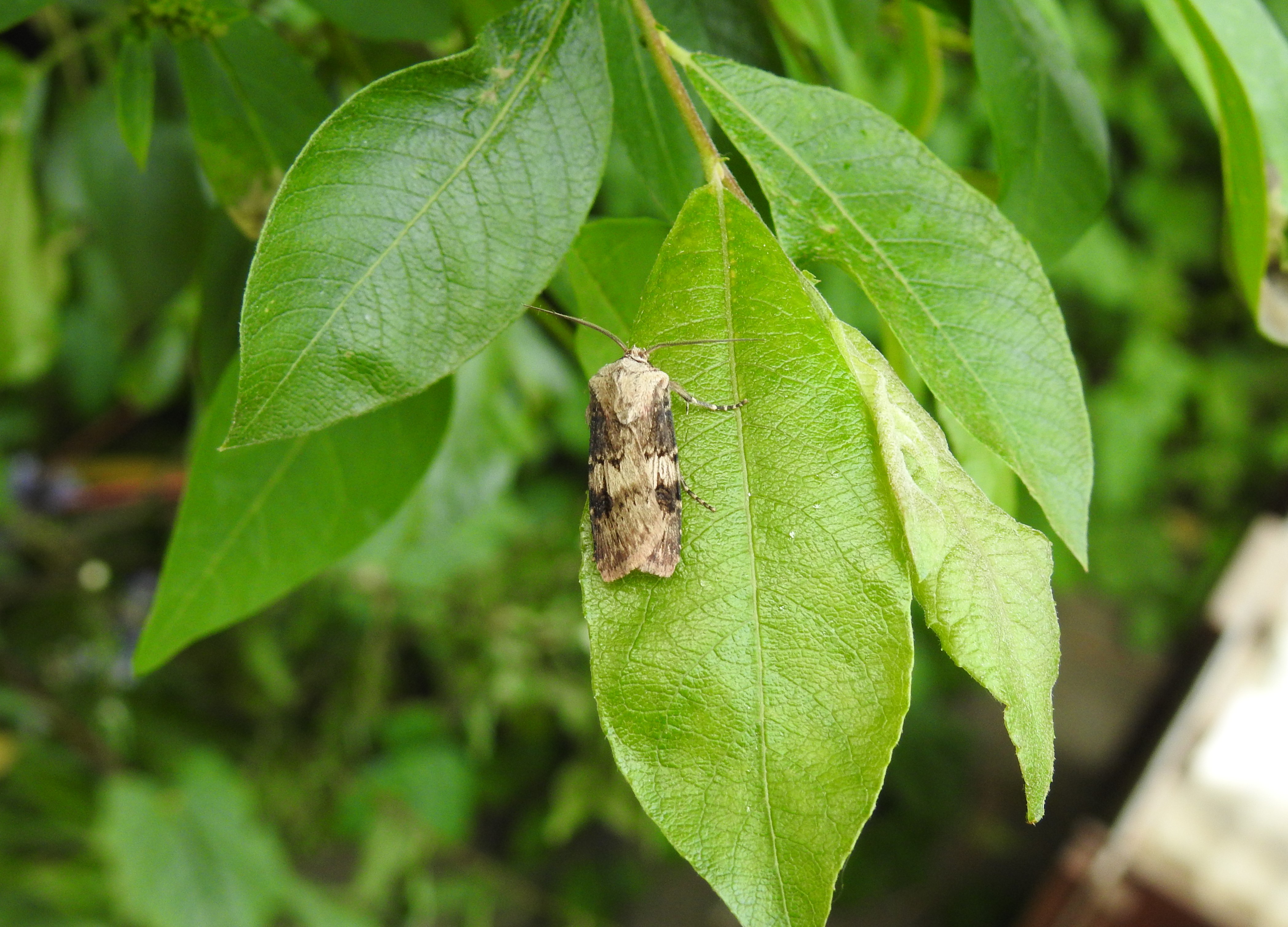
I've had my moth trap out a few times over the past few weeks in the garden, and the species that I have recorded, in no particular order, are Light Brown Apple Moth, Garden Carpet, Bee Moth, Flame Shoulder, Shuttle-shaped Dart, Marbled Coronet, Heart and Dart, Small Square-spot, Common Marbled Carpet, Turnip Moth, Cabbage Moth, Large Yellow Underwing, Dark Arches, Celypha striana, Freyer's Pug, Willow Beauty, Common Pug, Brown House Moth, Garden Grass-veneer, Square-spot Rustic, Sallow Kitten, Yellow-barred Brindle, Straw Dot, Clouded-bordered Brindle, Marbled Beauty, Riband Wave, Marbled Orchard Tortrix, Carcina quercana, White Ermine, Swallow-tailed Moth, Figure of Eighty, May Highflyer, Bright-line Brown-eye, Middle-barred Minor, Campion, Ingrailed Clay and Codling Moth.  
 
Swallow-tailed Moth
 
 
If you look closely at the right wing of this moth, you can see why it is called 
Figure of Eighty
 
The light trap attracts other beasties as well as moths, including various Crane and Caddis flies, and recently I've had Tipula lunata (a Crane Fly), Cinnamon Sedge and Grouse Wing (both caddis flies). I also had a Hawthorn Shield Bug in the trap this morning, as well as a few Welsh Chafers and a Turnip Sawfly on the Common Sorrel in my mini-meadow. 
 
Tipula lunata


Cinnamon Sedge
 
Turnip Sawfly (above & below)


Gail and I recently completed the last two checks of both our Pied Flycatcher and Tree Sparrow boxes, and it was mixed fortunes, certainly for the Pied Flycatchers anyway. At our friend's farm near Garstang all the Tree Sparrows have fledged, which is good news. As we headed into the woodland to check on the Kestrels, Gail spotted the female/juvenile Broad-bodied Chaser below, looking resplendent in the sunshine.
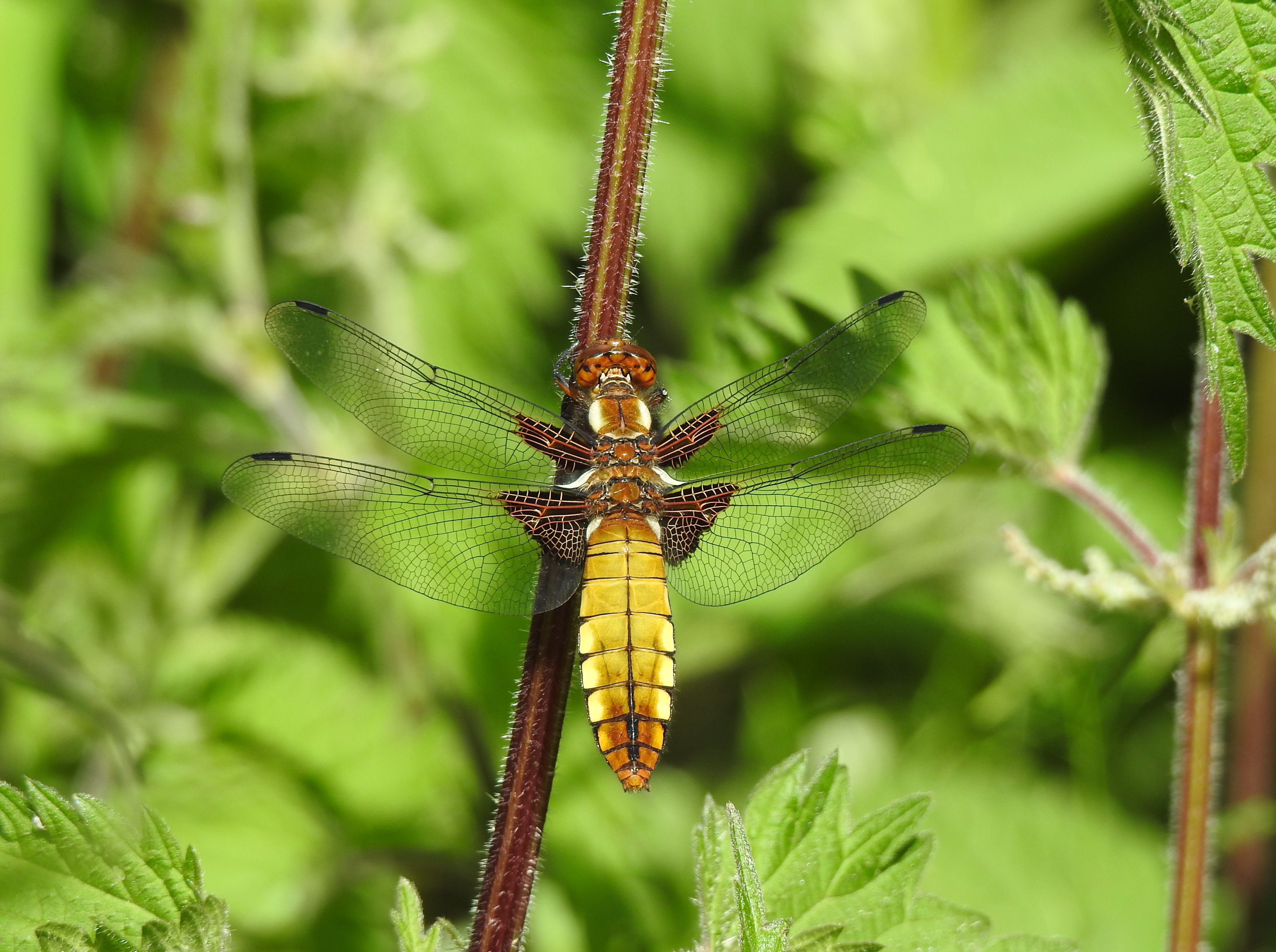
 
Broad-bodied Chaser
 
The Kestrels were still on five eggs and we also noticed a Stock Dove come out of one of our Tawny Owl boxes. A quick check revealed that she was incubating two eggs. 

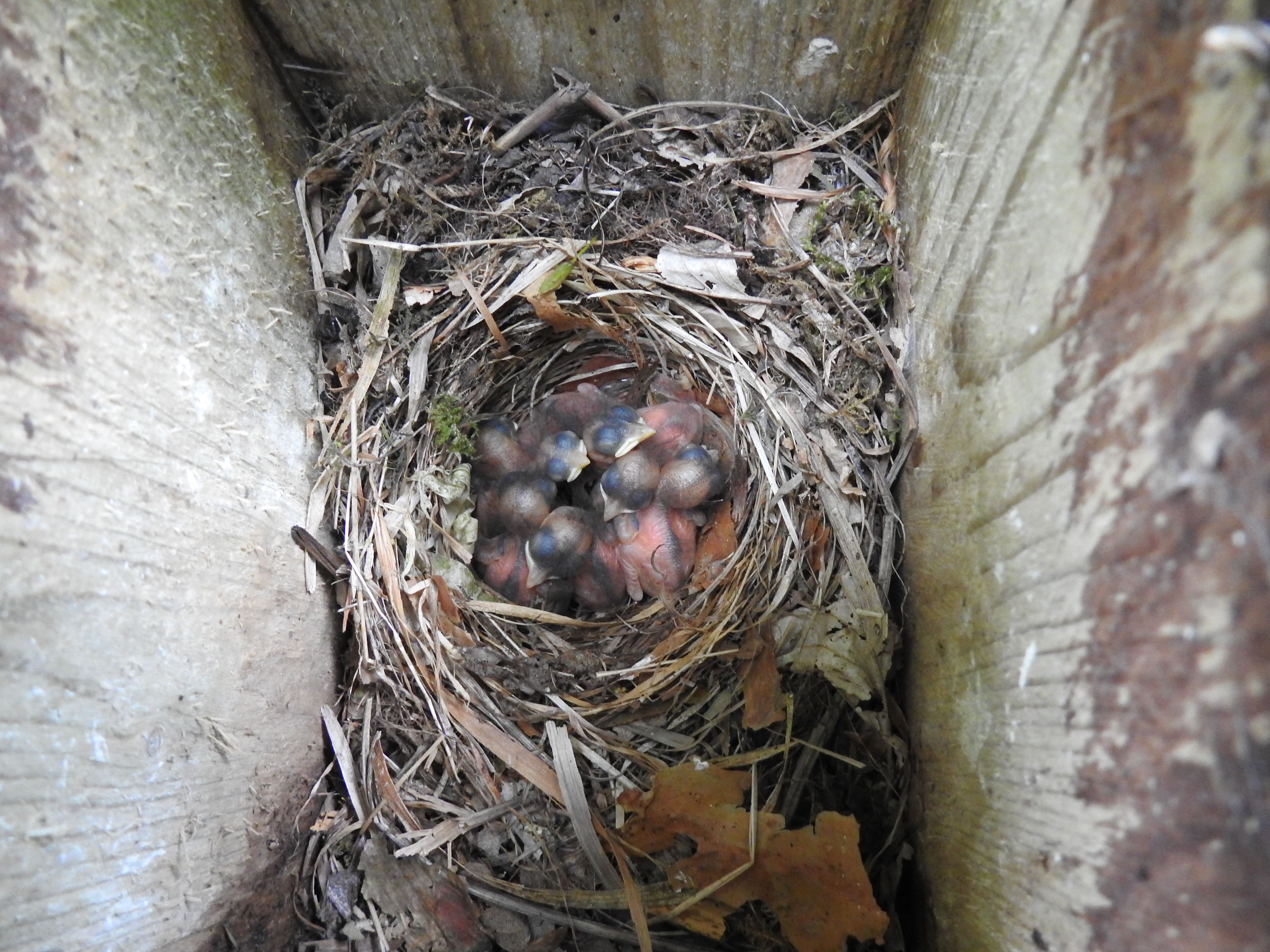
When we did the first of the two recent visits to our Pied Flycatcher boxes in Bowland we ringed three broods of Pied Flycatchers, two broods of seven and a brood of eight. Another female was still incubating seven eggs, and it was sad news for our fifth pair. When I climbed the ladder to the box I could smell a strong smell of decay, and in the box were six dead Pied Flycatcher chicks, and two that were barely alive. What was sad, was the fact that the female was brooding the dead chicks. I removed the dead chicks, and hoped the two very poorly chicks might make it, but I wasn't confident. 

Pied Flycatchers are polygamous, and males will often have two females. It might be that he was struggling to find food for both of his broods, or something might have happened to him. 

During the past couple of weeks, Gail and I have had a few walks along the quay on the Wyre Estuary and have recorded a few more plant species. Some of the species that we have added include Common Toadflax, Creeping Cinquefoil, Field Bindweed and Common Broomrape to name but a few. 
 
In preparation for the forthcoming autumn, it's nearly here, just a couple of weeks away, Gail and I headed to the reedbed and scrub to trim the net rides. We decided that we might as well put a couple of nets up to see if we could perhaps ring some early juv.'s out of the nest, but it wasn't to be, as all we caught was a recapture second calendar year Robin. Good data nevertheless!
 
Some warblers were in song, including two Cetti's Warblers, a Lesser Whitethroat, a Whitethroat and a Sedge Warbler. We confirmed successful breeding at the site again this year for Skylark, as we observed a pair of birds carrying food in to an area of suitable habitat. If only we'd had our thermal imaging scope with us! Note to self for next time...
 
Just over a week ago myself and two RSPB friends and colleagues carried out the third and final breeding wader survey on my client's farm in Bowland. It looked as though most pairs had finished breeding, with the exception of Curlew, with fledged individuals of Lapwing, Redshank, Snipe, Oystercatcher and Common Sandpiper. On my set of ten fields, I came across a pair of Lapwings with two small chicks, which I suspect was a second nesting attempt for a pair that probably lost their first brood at the egg stage. I had my thermal imager with me, so it was easy for me to find and ring the two chicks. 
 
Curlew
 
Oystercatcher


Lapwing chicks
 
The habitat around the ponds and the mature hedgerows supports a healthy population of Willow Warblers at the farm, and I had at least nine singing males. A Jay was a pleasant surprise, and I was serenaded by a singing Cuckoo all the time that I was doing the survey. The best of the rest included a Barn Owl, six Swifts, a Raven, two Buzzards, three Song Thrushes and a distant Red Kite
 
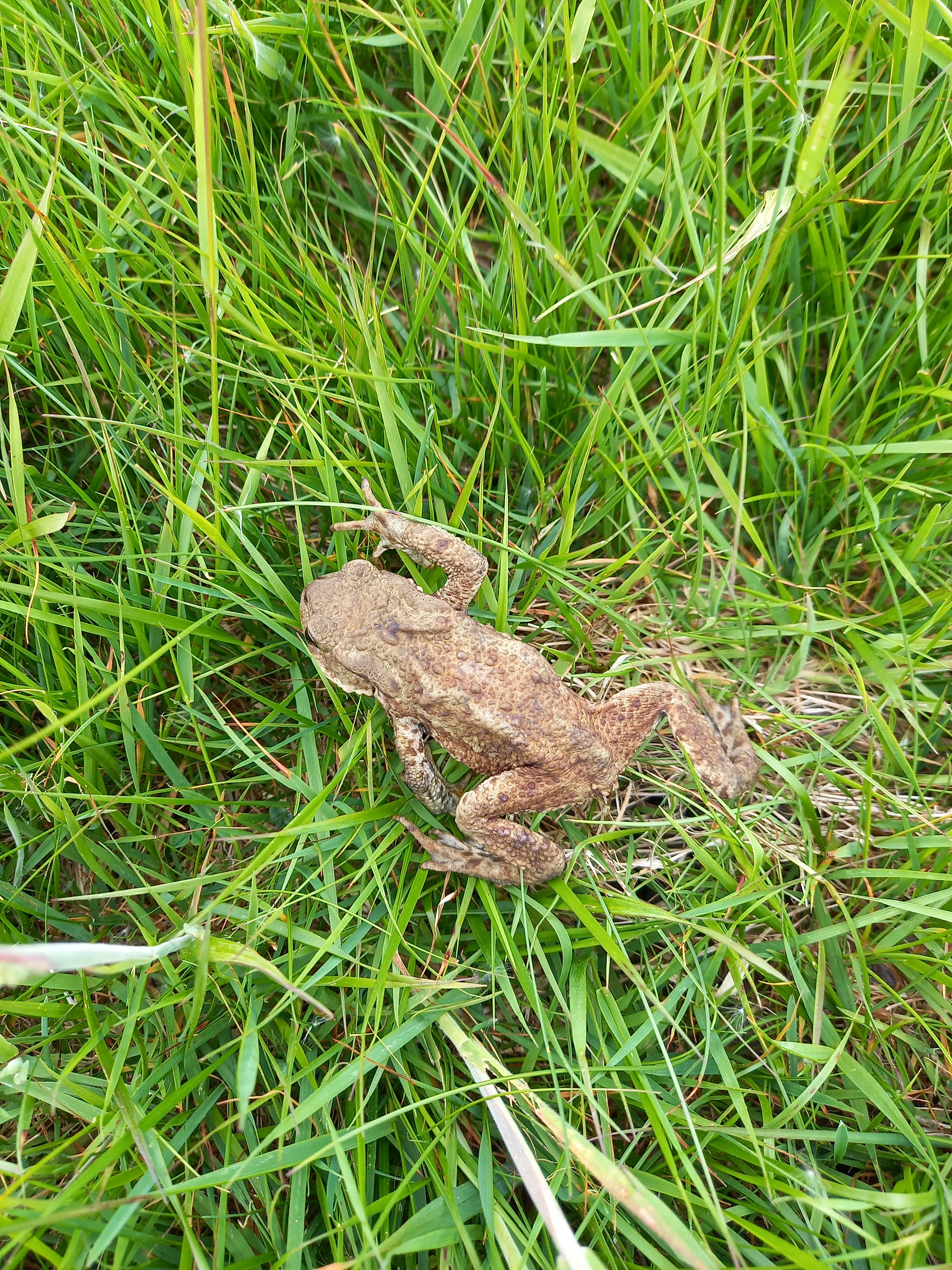
Even though the fields are 'bone' dry, there is still plenty
of water in the scrapes and ponds, so it was great to see 
this Common Toad as I crossed one of the fields
 
The second of our recent visits to check on our Pied Flycatchers resulted in more bad news. As we expected, the box with six dead and two dying chicks in it, revealed that the two chicks had died. Another two boxes had dead young in. One of the boxes we had ringed the chicks in, and they had developed further and had then perished. In fact, when I looked into the box, a handful of Sexton Beetles were already carrying out their undertaker duties! The box that had seven eggs in the week before had hatched, and then died several days later, judging by the size of them. 
 
As I stated earlier the deaths might have been caused by the loss of one or more of the adults to predation, or the adults might have been struggling to find food. Having said that, two other broods had fledged successfully, so the parents of those two broods had obviously found enough food. It happens sadly. 

Last Sunday we were back at our friend's farm to check on the Kestrels and Stock Doves. Four of the Kestrels had hatched, but there was still one egg. Two of the Kestrels were big enough to ring, but two weren't, so we will be back this weekend to check them again and ring them. It was the same with the Stock Doves, they'd hatched, but were too small to ring. 

A couple of days ago, Gail and I had a glorious morning at the Cumbria Wildlife Trust reserve Foulshaw Moss. I've blogged about this cracking reserve in the past, and we were hoping for a few dragons, and we weren't disappointed. 
 
We liked this sign that we came across on the reserve
 
Warblers were singing throughout our walk around the reserve and included a Chiffchaff, a Cetti's Warbler, four Willow Warblers, a Garden Warbler, a Grasshopper Warbler and two Blackcaps. The feeding station was busy with lots of juvenile Great Tits, but Chaffinch, Tree Sparrow, Goldfinch, Lesser Redpoll, Great Spotted Woodpecker, Blue Tit, Robin and Blackbird all visited. 

Out on the board walk we saw plenty of Large Red Damselflies, Common Blue Damselflies, Four-spotted Chasers, Azure Damselflies and a handful of Emperor Dragonflies and a single Black Darter. Sadly, no White-faced Darters on this visit, but we have seen them before here. Gail got fleeting glimpses of Common Lizard, and it was too hot for any Adder sightings. 
 
Four-spotted Chaser (above & below)


We had excellent views of Osprey, and had three in the air together, plus one on the nest. Presumably the Foulshaw pair, and another pair from a nest site nearby. To round off an excellent morning we bumped into an old friend of mine, DP, and we had a pleasant hour or so walking around the reserve with Dave reminiscing about old times, and putting the conservation world to rights!

Over on the right you will see that I have updated the ringing totals for Fylde Ringing up until the end of May. Four new species were ringed for the year during May, and these were Blackcap, Lapwing, Pied Flycatcher and Garden Warbler.

Below you will find the 'top 4 ringed for the month', and the top 8 'movers and shakers' for the year.

Top 4 Ringed in May

1. Blue Tit - 62
2. Great Tit - 35
3. Pied Flycatcher - 23
4. Sand Martin - 16

Top 8 Movers and Shakers

1. Blue Tit - 75 (up from 4th)
2.Goldfinch - 66 (down from 1st)
3. Great Tit - 48 (up from 4th)
4. Sand Martin - 29 (same position)
5. Chaffinch - 25 (down from 2nd)
6. Pied Flycatcher - 23 (straight in)
7. Lesser Redpoll - 17 (down from 3rd)
8. Reed Bunting - 10 (straight in)

Thursday, 25 May 2023

More Pied Flycatchers

Earlier in the week Gail and I had a walk along the quay again, and it was a pleasantly warm morning with five oktas cloud cover. Migration has slowed down now, as it does in late May, but we did have a singing Whitethroat from an area that I haven't recorded them before. It is possible that it was a late migrant, but the habitat is suitable for a breeding bird. Time will tell. 

We had our eyes firmly fixed groundward as well, looking for a few more plant species, and we had a couple of Common Blue butterflies. The main food plant for the caterpillars of Common Blue is Common Bird's-foot Trefoil, and other plants used include White Clover and Lesser Trefoil, all of which occur along the quay. 
 
Common Blue
 
We added a few more plant species, including Oxeye Daisy, Common Comfrey, Sea Plantain and Biting Stonecrop, taking our total for the quay to 47 species. 
 
Yesterday, Gail and I were back in Bowland checking our Pied Flycatcher boxes, and we needed to lift the last remaining female of the five pairs from the nest, if possible, and we also needed to trap the males if any of the chicks had hatched. 
 
Pied Flycatchers
 
We set traps in two of the Pied Flycatcher boxes where the chicks had hatched, and we managed to catch both males. The first male we had ringed as a chick at this site on 25/5/19, and we had subsequently caught him as a breeding male on 20/5/20 and 28/5/22. This is a powerful set of data that will provide information to help with the conservation of this amber listed species. 
 
The other thing we know from our records that is that on the three occasions that we encountered him he was using a different box each year. In 2019 he hatched from box 18, in 2020 he was using box 4, in 2022 he was in box 33 and this year box 25. Now, I know that this won't mean anything to you, but I can tell you that these four boxes are spread across this area of ancient semi-natural woodland. Because we originally ringed him as a chick, we also know that he is exactly four years old. We also know, that he has crossed the Sahara eight times flying from Bowland to his wintering area in tropical West Africa and back each year. The distance from his Bowland nesting area to his wintering area in West Africa is approximately 3,400 miles (5,549 km), so during his eight trips he has clocked up a staggering 27,200 miles on migration! Given that the circumference of the earth is 24, 855 miles, he has flown the equivalent of over one trip around the world. Staggering for a bird that weighs just 13 g on average! 
 
This is the guy that has flown 27,200 miles so far in his life!
 
The history of the other male was interesting as well. He was ringed as a chick from a box at another site monitored by Fylde Ringing Group, near Oakenclough, Lancashire by Andy on 17/6/21. This is about eight miles northwest of our site in the Hodder Valley as the Pied Flycatcher flies. Where he was in 2022, we don't know.
 
We also trapped his mate in the box at the same time, and from the ring she had on, we know that she was lifted off the nest from our site in the Hodder Valley on 8/5/22.
 
All good stuff!
 
We also ringed a brood of ten Blue Tits, and two broods of four Great Tits. A decent sized Blue Tit brood, but small Great Tit broods. The Great Tits may well have lost a few chicks at an early stage, and the adults would have removed them from the box. 
 
Blue Tit
 
In other news from the site, the Redstart was singing still from the other side of the river, and we recorded singing Blackcap, Chiffchaff, Chaffinch and Song Thrush from the woodland. Great Spotted Woodpecker, Lesser Redpoll and Siskin were also present at the site.
 
We're looking forward to our next visit.

Monday, 22 May 2023

Hatched in Derbyshire - Nesting in Lancashire

Before I get on to an update on the nest box checking that Gail and I carried out at the end of the week and over weekend, I just wanted to rewind a couple of days to another walk we had along the quay on the Wyre estuary. From a birding perspective, I have nothing to report, but we did add a couple of species of plant to our plant list for the site, and these were Common Vetch and Weld. I have to confess to not bothering with grasses, terrible of me I know, unless they are easy, such as the Barren Brome or the Cock's-foot that we recorded. I have tried with grasses, but I am sad to say they don't hold my attention. Maybe I need to try harder!

There were a few Small White butterflies on the wing, about 7 or 8, and we also had two Holly Blues. One was a female, that I photographed, but we didn't see the other well enough. 
 
Holly Blue
 
On the Thursday, we were back in Bowland checking our Pied Flycatcher boxes, and it was fairly overcast and warm, perfect conditions for checking boxes. If it's too hot, it becomes hard work running up and down the ladder numerous times. In fact, I worked out how many times I climbed up and down the ladder, and it was 51 times!
 
One of the first birds that we heard was a Redstart singing, but alas it was singing from the other side of the river. We always used to get one pair in our boxes, but sadly not for a good few years. To our eyes, the habitat looks the same, but no doubt there will be something not to the Redstart's liking. 
 
Five Pied Flycatchers were singing, which matches exactly with the number of pairs that we have in our boxes. Other songsters included a Goldcrest, two Blackcaps and a Chaffinch. We also had a Great Spotted Woodpecker, Lesser Redpoll and two Siskins 'knocking' about. We checked the area where the Spotted Flycatchers nest, but they have yet to arrive, and Spotted Flycatchers can be late, often just starting when the Pied Flycatchers are finishing. 
 
Female Pied Flycatcher
 
All of the Pied Flycatchers are now on eggs, and we managed to lift four females off the nest. One was unringed, so she received a ring, and the other three had been ringed elsewhere. The ringing records have been submitted to the British Trust for Ornithology (BTO), and they promptly returned the details of two of the birds to me today. One of the females was lifted off the nest at another nest box scheme just 5 km east, as the Pied Flycatcher flies, in May 2021. She was aged as a second-year bird, so we know that she was hatched in 2020, making her three years old now. 
 
The other female that we have been sent details of was hatched at Padley Gorge in Derbyshire in June 2022, some 88 km southeast from our site in Bowland. She was one of a brood of seven, and of course between hatching and us lifting her off the nest she has flown to tropical Africa, south of the Sahara, and back!  

  Pied Flycatcher from Derbyshire to Lancashire

We ringed three broods of Blue Tits and one brood of Great Tits, and on our next visit we will have a few more Blue and Great Tits to ring, and we might possibly be able to catch some of the male Pied Flycatchers in the boxes if the eggs have hatched. 
 
Blue Tit
 
Great Tit
 

In one of the boxes last time we checked there was a Pipistrelle sp. bat in it. When we checked this time, the Pip had moved to the next box. See below.   

Pipistrelle sp.
 
Some of the flowering plants on the woodland floor are starting to go over now, but others are still flowering, and I've included a few 'snaps' below.  

Bugle
 
Herb Robert
 
Lesser Stitchworts and Red Campions
 
Wood Speedwell
 

On Saturday we were at our friend's farm near Garstang checking the boxes there. We ringed a brood of two Tree Sparrows, and a large brood of eleven Blue Tits. One of the largest broods that I've encountered for some time. The Kestrels are still on 5 eggs, which is great news, but in other not so good news, there doesn't seem to be any Barn Owls in the box in the barn. We can check this box without going up to it, because Robert has a camera installed in it. There were no adults in the box, nor could we see any eggs. We will keep an eye on the camera just in case. Two Blackcaps and two Chiffchaffs were singing from the wood. 

There is a healthy population of Tree Sparrows at the farm, but most of them don't nest in our boxes. The barn and other buildings in the yard are full of holes and crevices, and you can see Tree Sparrows popping out of the brick/stonework all over the place. When you are stood in the yard, the constant background noise is the cheery tone of calling Tree Sparrows!

I ran my moth trap over Saturday night/Sunday morning and caught just nine moths of six species that were a Shuttle-shaped Dart, four Bee Moths, a Small Square-spot, a Heart and Dart and a Poplar Grey.
 
Poplar Grey
 
Shuttle-shaped Dart
 

We are back at our Pied Flycatcher boxes mid-week, so I'll let you know how we get on. 

I was reading in May's edition of British Birds that a report into the continuing outbreak of Highly Pathogenic Avian Influenza (HPAI) has been published by the BTO and the Joint Nature Conservation Committee (JNCC). To date, more than 60 species have been reported to have been affected across Britain. Data collected by the government's country conservation bodies and other organisations and volunteers, indicate that over 20,000 wild birds have died from HPAI, but I fear that it is a lot more than that. Wintering Barnacle Geese on the Solway Firth (one of my favourite places), breeding Great Skuas in northern Scotland, and Gannets in colonies right across Britain, have all been hit particularly hard. 

Monday, 15 May 2023

Botany and Boxes

Earlier in the week Gail and I had a walk along the quay by the estuary. It started off overcast, but warm, with a light westerly wind, and later on the sun made an appearance to brighten things up. 

I've mentioned before, that a few pairs of Swallows nest in some of the boat wrecks out on the mud of the quay. As we were walking along, a female Sparrowhawk flew low in front of us, and a male Sparrowhawk joined it, and seemed to be mobbing her. If this was the case, I can only assume that she wasn't his mate, and he was attempting to drive her out of his territory. However, the effect of two Sparrowhawks whizzing along the quay was to put all the Swallows up, and there were at least 14 - 15 individuals in the air, so a few more than the 2 - 3 pairs that I think are there! 

As we expected, there was nothing out on the mud, other than four Shelducks. A few Oystercatchers, 32, flew down river, and a calling Whimbrel remained unseen. 

On our way back along the quay, we decided to see how many species of plants we could identify. I have to point out that neither Gail and I are what you would class as competent botanists, and our plant ID leaves much to be desired. However, we did identify at least 35 species of flowering plants, including species like Hedge Mustard, Dove's-foot Cranesbill, Common Chickweed, White Stonecrop, Ribwort Plantain, Sea Beet, Smooth Sow-thistle, Birds-foot Trefoil, Kidney vetch, Lesser Trefoil, Herb Robert and Wood Forget-me-not (probably an escaped garden variety). Nothing rare, but I don't think we did too bad. 
 
Hedge Mustard
 
Herb Robert
 

After we'd walked along the quay, we went to check on the Ravens, and it was pleasing to note that they had fledged at least one young, as we observed at least one youngster out of the nest being attended by its parents.
 
Raven
 
Last Friday I was back on my client's farm in Bowland carrying out the second breeding wader survey with some friends/colleagues from the RSPB. I don't know the full details of the whole survey, but on my patch, I found out least 5 pairs of Lapwings, 3 - 4 pairs of Curlews, 3 pairs of Oystercatchers, a single Redshank and a pair of Snipe demonstrated by a bird drumming over my head for several minutes. Brilliant!
 
Lapwing
 
Whilst surveying 'my' fields I found a pair of Lapwings with two chicks, and with my thermal imaging scope, it was easy to find the two chicks to ring them. 
 
Lapwing chicks
 
As last time, I recorded several singing Willow Warblers, at least eleven, and two Cuckoos were singing as well. I had three Ravens fly over me heading to the fells to the north of the farm, and a cracking slate-blue male Sparrowhawk carrying food. I also had a Song Thrush carrying food, and a few Lesser Redpolls and Siskins were moving around. Three Sedge Warblers were singing from the wetland, and the two Swifts that I had were my first for the year. 
 
At weekend, Gail and I checked our boxes at our good friends Robert and Diana's farm near Garstang. Out of 30 Tit/Tree Sparrow boxes we had four occupied by Tree Sparrows (eggs/small young), six by Blue Tits and six by Great Tits. We checked the Kestrel box and there were five warm eggs, but it was less good news from the Owl boxes. The three Tawny Owl and one Little Owl boxes were all occupied by Grey Squirrels! In the future, we are going to experiment with blocking the entrances to keep the Squirrels out, and unblocking them in the new year when the Tawny's, in particular, are back on territory. 
 
Kestrel eggs
 
We had two singing Blackcaps in the woodland, two Chiffchaffs and a Willow Warbler. The only raptor we observed was a Buzzard being mobbed by two Ravens, and a pair of Moorhens had six young on the pond. 
 
It's more boxes later in the week for Gail and I, back to our Pied Flycatchers in Bowland, so I'll let you know how we get on. 
 
I'd never heard of the term 'jet zero' (sustainable aviation) before, until reading April 2023's British Wildlife. Apparently, former transport secretary Grant Shapps, pledged last year that the UK's aviation sector would be green by 2050, and said that "guilt-free flying is within our reach". However, this possibility has been quashed by the Royal Society. In Net Zero aviation fuels: resource requirements and environmental impacts, they have concluded that the production of 'sustainable' aviation fuel would require "enormous quantities (around half) of UK agricultural land or renewable electricity" just to maintain flights at today's levels. Less flying is what is required me thinks!

Tuesday, 9 May 2023

Pied Flyactchers

Yesterday, Alice, Gail and I checked our boxes in the Hodder Valley in Bowland. It was the first check of the season and we were eager to see how many pairs of Pied Flycatchers were using the boxes. 
 
Pied Flycatcher
 
We had four boxes where the females had started laying their clutches, and we had one box where the nest was complete, but laying hadn't yet commenced. At the moment, based on what we found yesterday, the occupancy rate this year is 12%. The long-term mean from 2002 - 2022 is 17%, but from the table below you will see how variable it can be from year to year. After the next couple of visits, we will have a better idea on what is happening this year.
 
 
In the other boxes we had a pair of Nuthatches and several pairs of Blue and Great Tits. Again, after another couple of visits we will be able to finalise the numbers. 
 
Note the mud on the box below the lid; Nuthatch in residence
 
Singing from the woodland we had three Blackcaps, a Garden Warbler, a Goldcrest and a Chiffchaff. And calling from the tree tops we had several Lesser Redpolls and Siskins. A Great Spotted Woodpecker was vocal, but remained unseen, as was a Kingfisher that flew down the river. 
 
The woodland habitat where our boxes are located (above), and a view of 
the River Hodder below
 
 
If the weather plays ball I have a breeding wader survey to do tomorrow, but I'll be waiting until later to make a decision. The problem is that at the moment the forecast isn't looking great for the rest of the week, or not until next weekend anyway.

Over on the right you will see that I have updated the ringing totals for Fylde Ringing Group up until the end of April. Five new species for the year were ringed in April, and these were Willow Warbler, Chiffchaff, Song Thrush, Sand Martin and Reed Warbler.

Below you will find the 'top 2' ringed during April, and the 'Top 6 Movers and Shakers' for the year.

Top 2 Ringed in April

1. Lesser Redpoll - 14
2. Sand Martin - 13

Top 6 Movers and Shakers for the Year

1. Goldfinch - 65 (same position)
2. Chaffinch - 24 (same position)
3. Lesser Redpoll - 17 (straight in)
4. Blue Tit - 13 (down from 3rd)
    Great Tit - 13 (same position)
    Sand Martin - 13 (straight in)

Monday, 1 May 2023

Shore To Shore

Over this past week I've birded both sides of the peninsula, from the Wyre Estuary to the Irish Sea coast, a whopping one and a half miles between the two! A week ago, Gail and I had a late morning walk along the quay alongside the Wyre estuary, and we were hoping for a migrant or two. There are a few wrecks dotted about on the edge of the mud and the saltmarsh, and they always attract a pair or two of nesting Swallows, and this morning there were at least two pairs displaying, singing and having a look round the wrecks. 
 
Wyre estuary
 
It was very quiet out on the mudflats, and all we had were three Shelducks and four Redshanks. Out on the estuary, something had flushed the Oystercatchers from the muscle beds, and 430 flew up-river. Invertebrates were thin on the ground, with just a couple of Small Tortoiseshells on the wing, and under the cool north-easterlies not even the Wild Pear blossom was attracting anything. A handful of Linnets headed north, and that was that. We called in at the coastal park briefly, but all we could muster was a single singing Willow Warbler
 
Wild Pear blossom
 
We were back a few days later, and the wind was now from a more promising south-easterly direction. A few Meadow Pipits, Linnets and Lesser Redpolls trickled north, and four Wheatears were feeding in the old ferry car park. We had hoped for a Whimbrel or two, but it wasn't to be.
 
One of the four Wheatears
 
This morning I headed to the coastal farm fields on the Irish Sea coast of the peninsula, and I set-up at my sea-watching location under 7 oktas cloud cover with a 10 - 15 mph NW wind. Straight away a few Alba Wags headed north, and the northerly passerine passage was joined by five Linnets, 19 Swallows, six Goldfinches, a House Martin and a Lesser Redpoll. 
 
Looking northwest from my sea-watching location
 
I had a decent count of Turnstones for this site, and as the tide ran in 99 were roosting on a rock groyne, until this got covered with water as well. Talking of water, there was some passage at sea and I had 39 Sandwich Terns, 122 Common Scoters, three Auk sp., 37 Gannets, four summer plumaged Red-throated Divers, a dark morph Arctic Skua, seven Cormorants and a male Eider
 
I didn't have anything that I would class as 'grounded', but it was good to hear singing Whitethroat, Lesser Whitethroat and Sedge Warbler. The site does seem to be holding several pairs of Meadow Pipits now, and a singing Skylark is always great to hear. Raptors were thin on the ground with just a male Kestrel perched up on a fence post. And that was it, a couple of hours bank holiday birding before most were up! 
 
Meadow Pipit
 
 
Several Dunnocks were singing from the hedgerows