Wednesday, 25 September 2024

Recenti-ish Bits and Bobs

For some reason, I seem to be struggling to write more than a couple of blogs per month of late, and I wish I could say that it is because I am spending so much time in the field, out from dawn until dusk, that I don't have time to post. But it isn't. I have been out when I can, but sometimes life has a habit of getting in the way of life at times, and this combined with some challenging weather has meant less time outdoors.  
 
Towards the end of August, armed with Britain's Plant Galls, Gail and I headed to local woodland, The Towers, which we can walk to from home, to try and see if we could find and identify some plant galls. We were partially successful, in that we found one species of gall, but natural history Guru, Fungal Punk Dave, has advised us that to identify which species, we would need to carry out some microscopy to see if the hairs were round headed, or pointed. Thanks Dave. 
 
A gall sp. on Sycamore 
 
We found a few invertebrates, in the form of a Tapered Drone Fly, nine Speckled Wood butterflies, several Anthomyia procellaris (a species of fly), and several Alder Leaf Beetles. In addition to the insects, we also came across the fungi Dryad's Saddle on some Sycamore, which we thought was quite spectacular. 
 
Anthomyia procellaris
 
Dryad's Saddle

Speckled Wood
 
A week later, we had an afternoon walk along the Wyre estuary from Jubilee Quay, and it was fairly cloudy, with a 15 - 20 mph south-westerly wind. Not the best weather for insects.
 
Eight Little Egrets along the shore was a reasonable count for here, and 84 Redshanks were feeding on the mud in the quay.
 
Surprisingly, we did have a few butterflies, and recorded three Red Admirals, two Small Whites, and a single Painted Lady
 
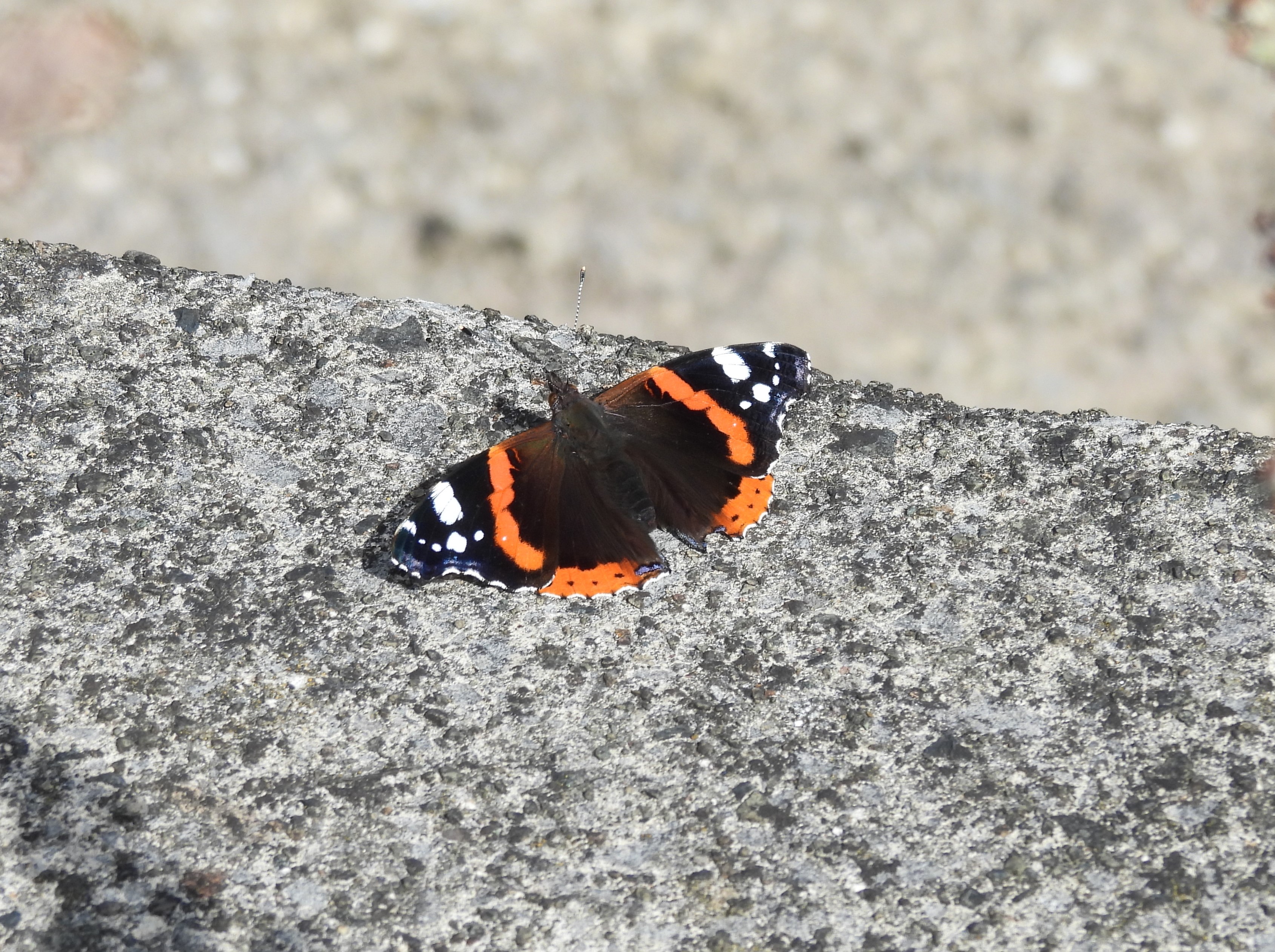
Red Admiral
 
Our moth catches from our garden light trap have been steadily dropping off, and I have totalled below our captures across all recent sessions:
 
Light Brown Apple Moth - 4
Ruby Tiger - 1
Large Yellow Underwing - 38
Double-striped Pug - 1
Eudonia angustea - 1
Square-spot Rustic - 1
Copper Underwing - 1
Garden Carpet - 2
Lesser Yellow Underwing -3
Common Rustic - 2
Setaceous Hebrew Character -4
Vine's Rustic - 1
 
As you can see, it has been quiet. 
 
At the start of September, I carried out a visible migration and sea watch from the farm fields at Larkholme. I had full cloud cover, with a 15 - 20 mph east-northeasterly wind, and it was a bit murky out at sea. 
 
There were lots of flying insects along the sea wall, hundreds of Crane Flies, plus lots of other smaller fly species, and this was attracting House Martins and Swallows. They were definitely on the move, heading south, but the number of flying insects was creating a good opportunity for them to feed, and they would stop-off, and fly low, up and down the sea wall, taking insects. I recorded at least 58 Swallows and 14 House Martins, but there was probably a lot more.  
 
House Martins and Swallows
 
Other than the hirundines, there wasn't much vis at all. I had a few grounded migrants in the form of six Wheatears and two Whitethroats

The sea was nearly as quiet, and the best bird I had was a Merlin! I picked up this small raptor heading south out at sea, and for a few seconds I wasn't sure what it was, and then I realised it was a Merlin. As it headed south it was being mobbed by several Sandwich Terns. I love stuff like that, migration in action! Talking of Sandwich Terns, they were the most numerous species at sea, and I had 36 heading south. In addition to the 'Sarnies' I had 49 Herring Gulls, five Cormorants, six Common Scoters, and an Atlantic Grey Seal. In addition to the 'sea' Merlin, I also had a Kestrel and a male Sparrowhawk on the raptor front, but both firmly over land. 
 
Earlier in the month, Gail and I had a walk out on to the saltmarsh on the Wyre mid-morning. The idea being to have a look for any waders on the river, but we made the mistake of not checking the tide times, and there was very little mud exposed, and consequently no waders! 
 
The Hawthorn tunnel (below in black & white)


Walking along the footpath through the Hawthorn scrub, or Hawthorn tunnel as we like to call it, we had two Jays, and we weren't sure whether we had recorded Jay here before. There is a lot more woodland generating in the area, so I suspect we shall be seeing more of them in the future. We had a couple of Chiffchaffs and a Blackcap on our walk down, and a couple of Common Darters were on the wing. 
 
When we set off on our walk we had six oktas cloud cover, but later in the morning the clouds cleared and it warmed up, and we had three Buzzards taking advantages of the thermals and heading south. 
 
Buzzard
 
I mentioned before about getting the tide times wrong, but this error did result in us having a decent count of Little Egrets, as they roosted along the bank next to the saltmarsh. We had 24, plus five Grey Herons

Out on the saltmarsh a few plants were still flowering, and we recorded Annual Sea-blite, Sea Aster, Sea Purslane, Purple Glasswort, and Sea Lavender. On some thistles on an area of former industrial land, we had a feeding flock of at least 40 Goldfinches, and along here we had two pairs of mating Common Blue Damselflies. On the walk back a Kestrel and a Cetti's Warbler made it into the notebook. 
 
Purple Glasswort 
 
Sea Aster
 
Male & female Common Blue Damselfly
 
A week later I was back at Larkholme under clear skies with a stiff, north-easterly wind, and it was very quiet. The best bird that I had on vis was a calling Yellow Wagtail south, with the addition of a handful of Swallows. 
 
The sea was even quieter, if that is possible, and the only record of note was a group 184 Herring Gulls on the sea. I walked the farm fields and didn't record any migrants, nor any insect activity, other than hundreds of Crane Flies! 
 
I recorded my first Pink-footed Geese for the autumn over my garden on 9th September. I could hear birds calling from high during brisk north-westerlies, but I couldn't see them, so I don't know how many there were. The following day I had 36 south over my garden, but at least I could see them!
 
About a fortnight ago we had a few days of strong winds, but there was a little too much northerly in the westerly, and along the Fylde coast a north-westerly wind is generally very poor for sea-watching, it needs to be between south-westerly and westerly. However, I thought I would head to Rossall Point and have a look. I also need to say that it was after lunch that I headed up there, so I am making all of my excuses in advance. 
 
On my first scan, I picked up a Fulmar (one of my favourite birds) shearing west. "Brilliant" I thought, and I truly believed that I was in for a few birds, but after about an hour and a half, all I could add to the Fulmar was a female Eider
 
Luckily, there were a few waders to look at, and I had 22 Turnstones, 28 Sanderlings, a Redshank, two Ringed Plovers, and 83 Oystercatchers. Why I ignored my own council regarding north-westerly winds I do not know! 
 
A few days later I was back at Larkholme for some more punishment. A few Meadow Pipits were on the move and I had 50 head south, and I also had a Reed Bunting, three Alba Wags, a Chaffinch, 104 Pink-footed Geese, and a Grey Wagtail also head south. 
 
Meadow Pipit
 
As the tide ran in, a few Turnstones started to roost on the rock groynes, and I had 48 in total. Other waders were a single Oystercatcher, ten Sanderlings, and an honorary wader in the form of a Little Egret, as it dropped onto the beach!
 
Yet again the sea was quiet, with just six Cormorants, 78 Common Scoters, and two Gannets, plus some Shelducks. The Shelduck movement was quite interesting, and it comprised of family groups with a mix of adults and juveniles, some close in, and others a long way out. I had 40 head north, and 11 south, which is probably what I would have expected at this time of year.  
 
Shelducks
 
Grounded migrants were very thin on the ground with just a single Wheatear, and the only raptor I had was a Kestrel. 

On a warm afternoon about a week ago, Gail and I decided to have a look at Larkholme Grasslands Biological Heritage Site (BHS) to see if there were any insects on the wing. However, when we got there the local authority was carrying out some management work on the site, and I was impressed, because they were managing it near perfectly. The grass had been cut, and it was being turned, before a forage harvester was picking it up. The cutting and removing helps to ensure that there is no build-up of nutrients, and the turning after cutting makes sure that all the seeds drop out of the cut grass. The removal of the cut grass also prevents any build-up of thatch within the sward, leading to better seed germination and plant establishment. Well done Wyre Council, credit, where credit is due. They also leave areas that remain uncut, to provide over-wintering habitat for invertebrates and small mammals. 
 
So, insects were few and far between, but we did have a Red Admiral, three Small Coppers, a Common Blue, and a Large White. There were also lots of grasshoppers, and Fungal Punk, Dave, kindly identified them as Chorthippus brunneus, from the one in the picture below. Thanks Dave. A Kestrel was taking advantage of all the activity, and hunting over the cut areas. 
 
Chorthippus brunneus
 
Small Copper
 

In my garden that day, I was stood with a coffee in hand, and some House Sparrows shot into the Ivy and Willows, and then I felt something brush the top of my head. I looked up to see a male Sparrowhawk undertaking a sharp right turn, before perching up on my shed. It looked at me for a second, and then flew off! 
 
Last Friday, Gail and I had our first ringing session at the Nature Park for a while. We had clear skies, and it was flat calm at first, before picking up later in the morning. As we were putting the nets up a few Starlings were exiting their roost, but perhaps no more than about 500. 
 
We ringed 14 birds as follows (recaptures in brackets):
 
Long-tailed Tit - 3
Reed Warbler - 1
Cetti's Warbler - 2 (1)
Blackcap - 1
Grey Wagtail - 1
Great Tit - 2
Greenfinch - 3
Blackbird - 1 
 
The lovely lemon underparts of a Grey Wagtail
 
Long-tailed Tit

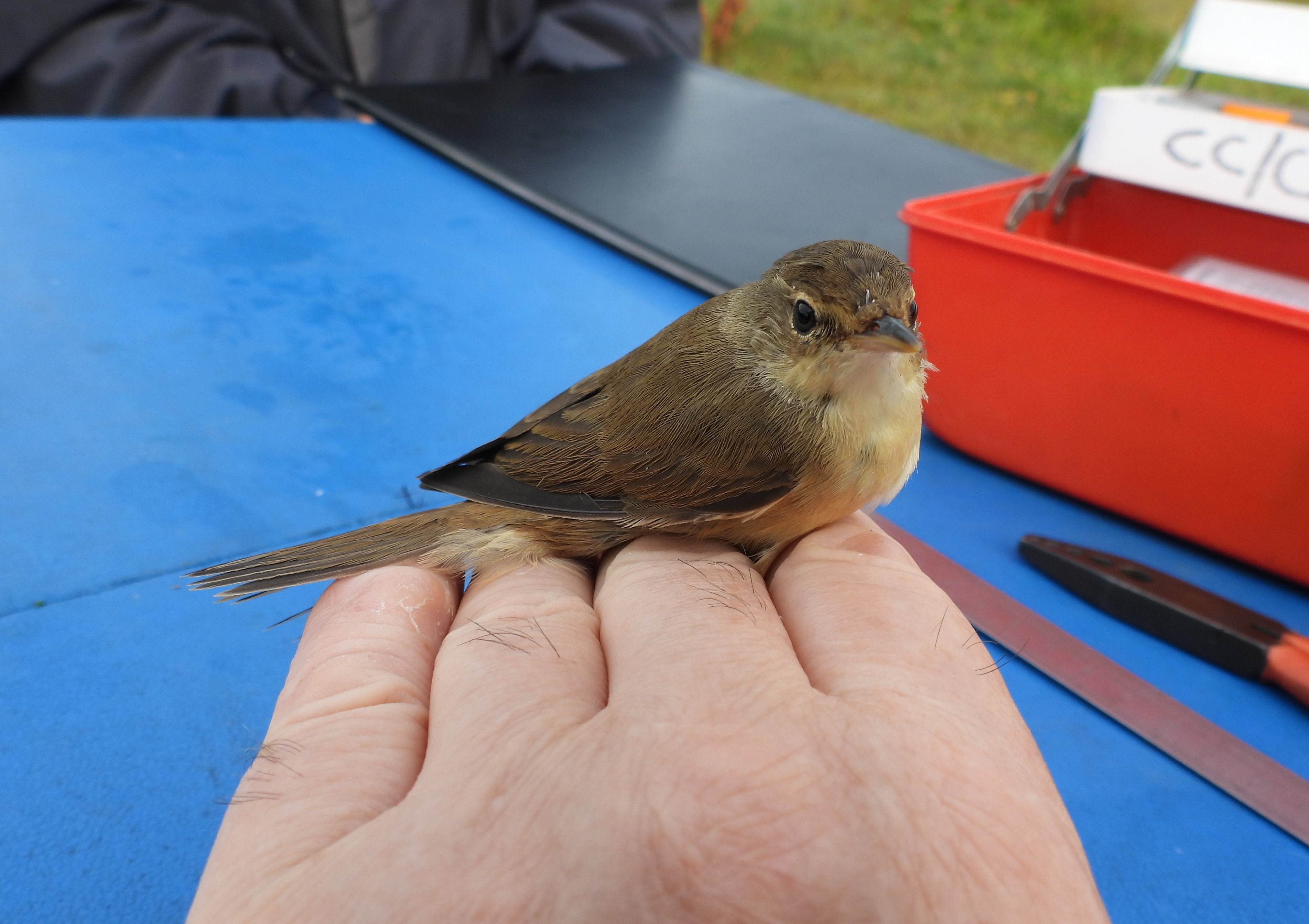
Reed Warbler
 
During the morning, Pink-footed Geese were arriving from the south (Ribble Estuary?) and then heading east. Most remained unseen, but we did see 211. Visible migration was slow with just a handful of Meadow Pipits, and a small handful of Grey Wagtails south. 
 
Pink-footed Geese
 
The winds have been north-easterly for a few days now, and there have been lots of Yellow-browed Warblers on the east coast, so on Sunday morning I thought I would check the Cemetery and Mount Park. It was a bit of a cold, grim morning to be honest, and the north-easterly wind was fairly strong. Not dissimilar to seawatching on this coast, it is better for eastern migrants if the wind is between easterly, and south-easterly. As a consequence, I didn't record a single migrant, other than perhaps the eight Robins. 

I headed over to the Mount just as it started to rain heavily, but that wasn't the main problem, I couldn't park! I hadn't realised that there was a triathlon event that morning and the sea-front and associated car parks were closed, and I couldn't park anywhere around the hillock that the Mount sits on! It was time to head home for a coffee! 

It's not looking great weather-wise for the next week or so, with a westerly air stream back in charge, but we'll wait and see. 
 
Over on the right you will see that I have updated the ringing totals for Fylde Ringing Group up until the end of August. Two new species were ringed for the year during the month, and these were Coal Tit and Meadow Pipit. Only one species was ringed in double figures during August, and this was 21 Meadow Pipits.
 
Below you will find the 'Top 10 Movers and Shakers' for the year.
 
Top 10 Movers and Shakers
 
1. Siskin - 112 (same position)
2. Blue Tit - 86 (same position)
3. Goldfinch - 47 (same position)
4. Reed Warbler - 43 (up from 7th)
5. Tree Sparrow - 34 (down from 4th)
    Great Tit - 34 (up from 6th)
7. Chaffinch - 30 (down from 5th)
8. Meadow Pipit - 21 (straight in)
9. Sedge Warbler - 15 (down from 8th)
    Blackcap - 15 (down from 8th)

Tuesday, 20 August 2024

More Scales Than Feathers

So far, August is shaping up to be a quiet month on the natural history front, well for me anyway, and moths and butterflies have been featuring more than birds, but I have been going out as much as I can. The weather hasn't been great for many ringing sessions, nor has it been brilliant for looking for insects, but Gail and I have been trying. 
 
I have lumped together our moth catches from our garden light trap from the beginning of the month until this morning, and we have recorded 117 moths of 27 species, which is sadly, very quiet. Moth trap intruders have included a few Mottled Sedge caddis flies, European Crane Fly, and this morning a species of Harvestman, Opilio canestrinii. This species of Harvestman was first recorded in the UK in 1999 in Essex, and since then it has become more widespread and common. It has expanded northwards from Italy, Austria and Switzerland. 
 
Our moth totals are as follows:   

Common Rustic -35
Codling Moth - 4
Clay - 1
Dark Arches -2
Copper Underwing -4
Light Brown Apple Moth - 14
Poplar Hawkmoth - 1
Lesser Yellow Underwing -7
Flame Shoulder - 4
Large Yellow Underwing -17
Cabbage Moth - 1
Box-tree Moth - 1
Lesser Broad-bordered Yellow Underwing -3
Willow Beauty -3
Garden Carpet - 3 
Agriphila straminella -2
Double-striped Pug - 1
Brown House Moth -3
Setaceous Hebrew Character - 1
Square-spot Rustic -3
Marbled Beauty - 1 
Small Square-spot - 1 
Yellow Shell - 1
Bright-line Brown-eye - 1 
Grey Dagger - 1
Shuttle-shaped Dart - 1
Vine's Rustic - 1 
 
Copper Underwing
 
Grey Dagger

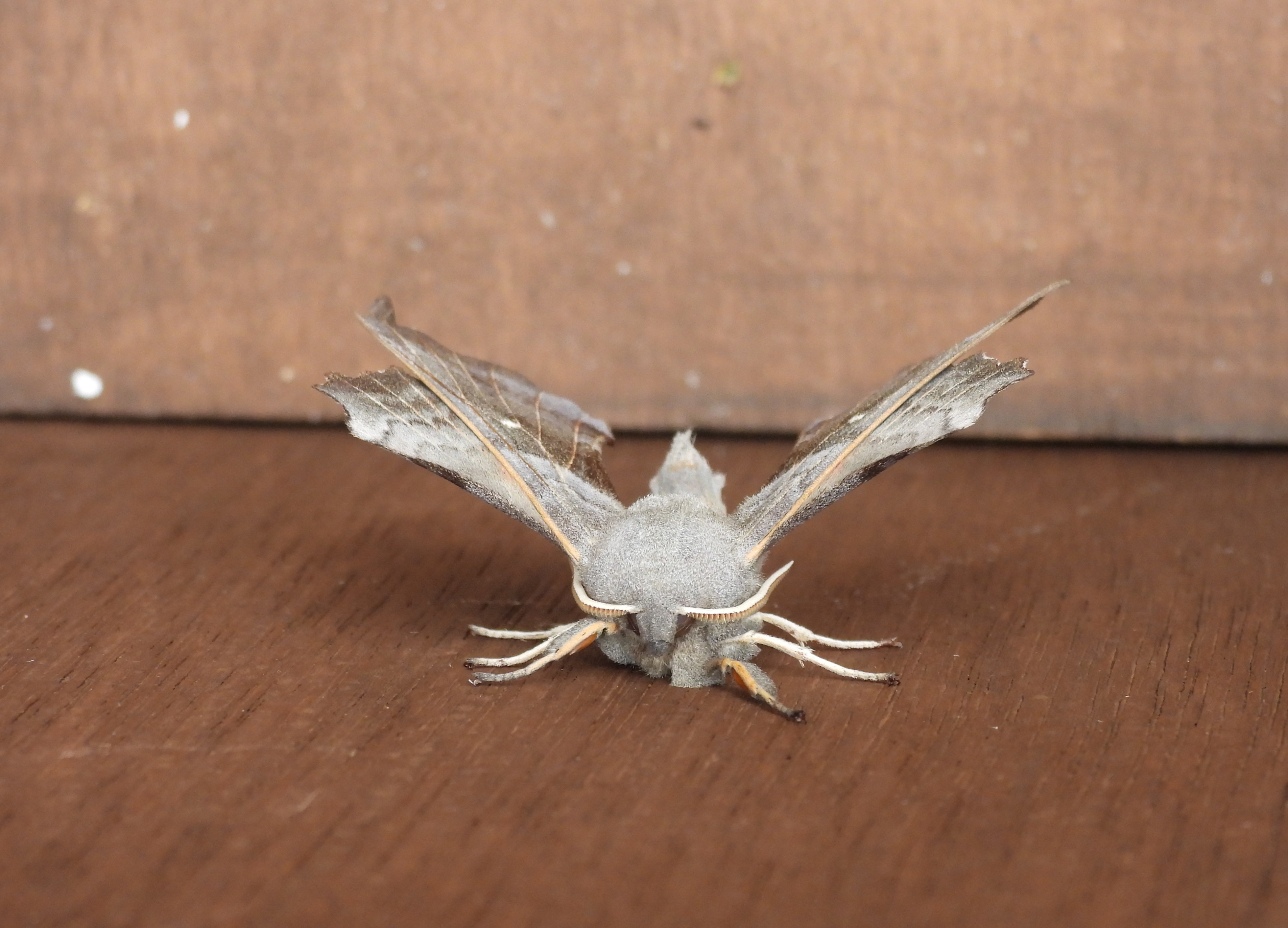
Poplar Hawkmoth walking up the side of our light trap
 
Just under two weeks ago, we went out late morning looking for a few butterflies at various sites, and again it was quiet. The weather was okay temperature-wise, but it was a tad breezy, affecting one site more than the other. 

We started off at Larkholme Grasslands, and we recorded 8 Meadow Browns, 4 Small Skippers, 4 Common Blues, and a Small White. We then had a look in the dunes at Rossall Point, but it was too breezy here, and we just had 10 Meadow Browns, a Common Blue, a Large White, and 2 Speckled Woods (scrubby area).
 
Meadow Brown
 
Speckled Wood
 

About a week ago, we had a ringing session at the Nature Park, and we had 6 oktas cloud cover, with a 10 mph south-easterly wind. As we were putting the nets up, the Starlings were exiting their reedbed roost, and we estimated about 4,000, which is an increase on recent weeks. 
 
It felt quiet as we put the nets up, and it was quiet, as we only ringed ten birds as follows:
 
Reed Warbler - 4
Cetti's Warbler - 1
Whitethroat - 2
Willow Warbler - 2
Blackbird - 1 
 
Reed Warbler
 
Sometimes it can feel quiet, and we have a good session, and other times we have a good feeling about the morning, and we have a poor session, you really can't tell what it's going to be like. 

The birding was equally as quiet, and all that is perhaps worth mentioning are 2 Whimbrels, a Little Egret, a singing Cetti's Warbler, a Raven, and a Great Spotted Woodpecker.

We recorded a few insects, namely a Common Blue Damselfly, 2 Meadow Browns, 3 Speckled Woods, a Gatekeeper, and 2 Common Blue butterflies. 

I have recorded Swifts over the house and garden in the evenings, but none since two on 12th August. 

Inspired by, and on the recommendation of, a great guy called Dave Higginson-Tranter, who posts some brilliant videos on YouTube, mainly about fungi, I purchased Britain's Plant Galls - A Photographic Guide by Michael Chinery recently. The intention is for Gail and I to start looking for plant galls when we are out and about. We had a look in the garden, and found a few Eupontania pedunculi galls on the Willows in our garden, known as the Willow Gall Sawfly. It's a great book, and I can heartily recommend it, and it gets you looking for other things when you are out in the great outdoors, or even in your garden. 
 
An excellent book
 
Eupontania pedunculi
 

A couple of days later, Gail and I had a late morning walk from the Quay and along the Wyre estuary, again hoping for a few insects as it was sunny, but there was a niggling westerly wind. 

We did have a few butterflies on the wing; 2 Small Whites, 2 Red Admirals, a Common Blue, 3 Peacocks, and a Painted Lady, which I think was our first of the year. 
 
Panted Lady (above & below). I like the contrast of the above picture between
the harshness of the rusted razor wire, perhaps suggesting a landscape of decay, 
and the beauty of the butterfly, showing that there is life and hope if we want it. 
 

Out on the mud in the Quay were 97 Redshanks, our biggest count of the autumn so far. We also had a handful of Oystercatchers, but out over the river they were constantly heading downstream towards Great Knott, to feed in the mouth of the estuary. Also on Great Knott, between Fleetwood and Knott-End-on-Sea, there were at least 730 Sandwich Terns roosting, which is the most that I have seen there. 
 
Sandwich Terns
 
We also had 3 Little Egrets and a Whimbrel on the water's edge along the river. Walking back, we sat down overlooking the estuary on the old quayside, and we were looking at some Sea Plantain that had gone over, when we noticed some invertebrates running around on the vertical plain of the sandstone blocks, and then they would disappear into the joints of the blocks. After a few photographs, a bit of Googling, consulting some books back home, we concluded that they were a species of jumping bristletail, Petobrius brevistylis or maritimus. They are common, but it is amazing what you can see, if you take the time to look.
 
Little Egret
 
Petobrius brevistylis or maritimus (click the picture for a better view)
 
The following day I decided to have a sea-watch off Larkholme. I arrived at first light under 5 oktas cloud cover, with a 15 - 20 west-southwesterly wind. I set up at my seawatching/visible migration watch point, and enjoyed watching five Curlews bathing and preening in the water of the incoming tide.
 
One of the five Curlews
 
The sea was quiet, although I enjoyed the highlight, which was a dark morph Arctic Skua that was leisurely heading north, harassing Sandwich terns as it went. I always marvel at the manoeuvrability of these large kleptoparisitic birds, as they out-fly smaller, more agile Terns. Stunning! 
 
The supporting cast to the Skua were 47 Sandwich Terns, 25 Common Scoters, and 12 Shelducks. I didn't have any visible migration, and my walk around the farm fields didn't produce much other than 2 Kestrels, 11 Magpies, two Linnets, and a juvenile Reed Bunting
 
Reed Bunting
 
The forecast isn't looking great over the next few days, with unsettled weather from the west in charge, but if there is a possibility to get out, we'll take it.

Thursday, 1 August 2024

July

July is a pretty poor title I know, mainly because this blog post concerns itself with the second half of July, but it was the best that I could come up with. Sometimes, I'll start writing a post without a title, and the title becomes obvious from the nature of the post, but not this time.  

Mid-July saw Gail and I carrying out the final breeding bird survey of our coastal site in northwest Cumbria. It was a glorious morning, with clear skies, and a light southerly wind. Whitethroats were very much in evidence at different stages in their breeding cycle, as we encountered a few fledged juveniles, and two different adults carrying food, so they obviously still had young in the nest. Whitethroats can have 1 - 2 broods, but I suspect few will have two broods this year, as it seems that a lot of birds lost at an early stage, and started again. 

There was a trickle of Swallows south, only about fifteen, but definitely a southerly movement. We had two pairs of Stonechats, but didn't notice any juveniles, and I suspect that they have finished nesting now. House Martins from the nearby housing estate were foraging for insects, and we also had a pair of Kestrels

Throughout the second half of the month, we have operated our garden moth trap several times, including overnight Sundays into Monday, so that I can show our 22-month old grandson, Alex, some of the moths. I am not sure how impressed he is with moths, although he did seem to be impressed with a Buff-tip that Gail showed him. He does wander round shouting Gull and moth, so I hope we are doing something right.
 
Gail showing Alex a Buff-tip moth
 
I have decided to lump together my totals for the month, rather than to post individual day totals, so below, in no particular order, is what we trapped in the second half of July:
 
Riband Wave - 8
Codling Moth - 9
Double-striped Pug -2
Marbled Beauty - 13
Clay -2
Dot Moth -5
Smoky Wainscot - 1
Dark Arches -10
Bright-line Brown-eye -2
Light Brown Apple Moth - 14
Brown House Moth -5
Garden Grass-veneer - 2
Clepsis consimilana - 3
Buff Ermine -3
Carcina quercana -11
Fan-foot -5
Common Rustic - 12
Mottled Rustic - 1
Single-dotted Wave -5
Large Yellow Underwing- 3
Old Lady - 1
Lesser Yellow Underwing - 4
Bee Moth -3
Small Dusty Wave - 2
Garden Carpet - 2
Uncertain - 2
Shuttle-shaped Dart - 1
Buff Arches - 1
Swallow-tailed Moth - 1
Rustic - 2
Common Pug - 1
Yponomeuta sp. -2
Pine Shoot Moth - 2
Small Angle Shades - 1
Scalloped Oak - 3
Yellow Shell - 1
Eudonia mercurella - 1
Iron Prominent - 1
Dotted Clay - 2
Willow Beauty - 1
Buff-tip - 1
Cabbage Moth - 1
Flame Carpet - 1

153 moths of  44 species.
 
Buff-tip
 
Flame Carpet

 
Old Lady
 
If you don't already run a light trap in your garden, or indeed in other habitats, I can heartily recommend it. It is so interesting, and absolutely fascinating, and particularly if you post your records to an online biological data recording system like iRecord you are contributing to our knowledge on moth populations, and this data can then be used to aid in their conservation. A win, win situation! What's not to like?
 
Just over a week ago, we had an early afternoon walk through Larkholme Grasslands Biological Heritage Site (BHS) to look at a few plants, and hopefully it would be warm enough for a few butterflies to be on the wing. We had clear skies, with a 15 mph WNW wind.
 
We had three species of butterfly, and one species of day-flying moth; 22 Meadow Browns, 1 Small White, 5 Small Skippers, and 2 Silver Ys.
 
In the second half of July, Gail and I managed to have two ringing sessions at the Nature Park. We were keen to get a few sessions in before the end of the month, to be confident that we had encountered as many of the local breeding birds as possible. Interestingly, the lack of recaptures during the sessions would suggest that the birds have quickly moved on. I've lumped the totals from the two sessions together below, and we ringed 38 birds (recaptures in brackets):
 
Wren - 1
Chiffchaff -2
Cetti's Warbler -5
Blue Tit - 2
Reed Warbler -5
Blackcap -6
Sedge Warbler -6
Whitethroat -2
Robin - 1
Blackbird - 1 
Goldfinch - 2
Reed Bunting - 1
Willow Warbler - 1
Long-tailed Tit - 3 (2) 
 
Cetti's Warbler
 
Chiffchaff
 

Driving along the road to the Nature Park, we flushed 15 - 20 Blackbirds, and it would seem that they have had a good breeding season. However, in the south of England, and particularly in Greater London, they have been struggling. 
 
The British Trust for Ornithology (BTO), think a new virus, first detected in London in 2020, may be accelerating the decline of blackbirds in the UK. 
 
The Usutu virus (USUV), originally discovered in the 1950s in Africa, and present in Europe for the past three decades, is carried and transmitted by mosquitoes. Culex pipiens, or the Common House Mosquito, is one of the main culprits – the species is native to the UK and is ornithophagic, meaning bird-biting.
 
Hugh Hanmer, senior research ecologist with the BTO, said that “the overall fatality rate is unknown, but the Usutu virus causes systemic infection in Blackbirds, affecting multiple organs including the brain. Affected Blackbirds are most often found dead without prior evidence of ill-health.”
 
Certainly, one to watch out for, and let's hope this virus doesn't spread.
 
As we opened the gates to gain access to the site, we could hear Sandwich Tern and Whimbrel calling from the estuary, and a Grasshopper Warbler was reeling nearby. 
 
Common Centaury. This is just starting to flower now at the Nature Park
 
During both sessions, as we were putting the nets up, the Starlings exited their reedbed roost, and we estimated about 1,000 and 900 birds respectively. Two juvenile Ravens over, would indicate successful breeding locally, and on both dates the only raptor we had was a female Sparrowhawk.  

Hemp-agrimony. Just starting to flower at the Nature Park.
 
Knotted Pearlwort. As I was putting the poles back on the car, I noticed these
white flowers in the sward.
 

As it warmed up, a few butterflies were on the wing, including 4 Speckled Woods, 2 Common Blues, 2 Gatekeepers, a Large White, 4 Small Whites, and a Meadow Brown. We also had a Common Blue Damselfly, and a Siver Y moth.  

A couple of days ago, we waited until it had warmed up in the afternoon, before having a walk along the estuary from the Quay. We were hoping for a few common butterfly species, and we recorded 7 Small Whites, 11 Common Blues, 4 Gatekeepers, and a Red Admiral. We also had a Silver Y moth, lots of Common Drone Flies, Honey Bees, and Bumblebees (mainly Red-tailed, Buff-tailed and Common Carder).
 
Buff-tailed Bumblebee
 
Common Blue
 
Common Drone Fly
 
A worn Gatekeeper
 
Honey Bee

Redshanks were starting to build up in numbers again on the mud in the quay, and we had 60, alongside nine Little Egrets in the estuary. 
 
Little Egret
 
I note that Spring 2024 (March, April, and May), has been confirmed as the hottest on record in the UK, beating the highest previous temperature by 0.25 C. It was also the wettest spring on record since 1986, and it is this in particular this year, that will have caused the problems that I and other naturalists have observed, with some of our breeding birds. It most certainly has caused lots of failed nesting attempts, but based on the ratio of adults to juveniles that we are catching in our reedbed and scrub site, perhaps the birds have caught up a bit with later nesting attempts. Let's hope so! 

Over on the right you will see that I have updated the ringing totals for Fylde Ringing Group up until the end of July. During the month eight new species were ringed for the year, and these were Wren, Sand Martin, Blackcap, Grey Wagtail, Lesser Whitethroat, Cetti's Warbler, Whitethroat, and Reed Bunting. 

Below you will find the top 3 ringed in July, and the top 9 'movers and shakers' for the year.

Top 3 Ringed in July

1. Blackcap - 12
    Reed Warbler - 12
2. Sedge Warbler - 11

Top 9 Movers and Shakers

1. Siskin - 112 (same position)
2. Blue Tit - 81 (same position)
3. Goldfinch - 37 (same position)
4. Tree Sparrow - 34 (down from 3rd)
5. Chaffinch - 30 (down from 4th)
6. Great Tit - 28 (down from 5th)
7. Reed Warbler - 23 (down from 6th)
8. Sedge Warbler - 12 (straight in)
    Blackcap - 12 (straight in)

Tuesday, 16 July 2024

Disconnect With Nature

A friend (Stewart) shared a link to a powerful poem on his Facebook page, and it is well worth a read. The poem is also a book, and it is by Tom Hirons, who is obviously a very talented 'Word Smith'. I read it to myself, and it got right into my soul. I read it aloud to Gail, and as I was reading it to her, I noticed that she had stopped what she was doing, and was transfixed listening. To me, the poem emphasises how we are part of nature, and perhaps how many of us in these troubled times, have lost that connection, and how important it is for us to immerse ourselves in nature, and try to repair those broken links. I hope Tom doesn't mind, but I have reproduced the poem in full below. Anyway, see what you think. And if you like it, maybe buy Tom's book.

Sometimes a Wild God

Sometimes a wild god comes to the table.
He is awkward and does not know the ways
Of porcelain, of fork and mustard and silver.
His voice makes vinegar from wine.

When the wild god arrives at the door,
You will probably fear him.
He reminds you of something dark
That you might have dreamt,
Or the secret you do not wish to be shared.

He will not ring the doorbell;
Instead he scrapes with his fingers
Leaving blood on the paintwork,
Though primroses grow
In circles round his feet.

You do not want to let him in.
You are very busy.
It is late, or early, and besides…
You cannot look at him straight
Because he makes you want to cry.

Your dog barks;
The wild god smiles.
He holds out his hand and
The dog licks his wounds,
Then leads him inside.

The wild god stands in your kitchen.
Ivy is taking over your sideboard;
Mistletoe has moved into the lampshades
And wrens have begun to sing
An old song in the mouth of your kettle.

‘I haven’t much,’ you say
And give him the worst of your food.
He sits at the table, bleeding.
He coughs up foxes.
There are otters in his eyes.

When your wife calls down,
You close the door and
Tell her it’s fine.
You will not let her see
The strange guest at your table.

The wild god asks for whiskey
And you pour a glass for him,
Then a glass for yourself.
Three snakes are beginning to nest
In your voicebox. You cough.

Oh, limitless space.
Oh, eternal mystery.
Oh, endless cycles of death and birth.
Oh, miracle of life.
Oh, the wondrous dance of it all.

You cough again,
Expectorate the snakes and
Water down the whiskey,
Wondering how you got so old
And where your passion went.

The wild god reaches into a bag
Made of moles and nightingale-skin.
He pulls out a two-reeded pipe,
Raises an eyebrow
And all the birds begin to sing.

The fox leaps into your eyes.
Otters rush from the darkness.
The snakes pour through your body.
Your dog howls and upstairs
Your wife both exults and weeps at once.

The wild god dances with your dog.
You dance with the sparrows.
A white stag pulls up a stool
And bellows hymns to enchantments.
A pelican leaps from chair to chair.

In the distance, warriors pour from their tombs.
Ancient gold grows like grass in the fields.
Everyone dreams the words to long-forgotten songs.
The hills echo and the grey stones ring
With laughter and madness and pain.

In the middle of the dance,
The house takes off from the ground.
Clouds climb through the windows;
Lightning pounds its fists on the table
And the moon leans in.

The wild god points to your side.
You are bleeding heavily.
You have been bleeding for a long time,
Possibly since you were born.
There is a bear in the wound.

‘Why did you leave me to die?’
Asks the wild god and you say:
‘I was busy surviving.
The shops were all closed;
I didn’t know how. I’m sorry.’

Listen to them:

The fox in your neck and
The snakes in your arms and
The wren and the sparrow and the deer…
The great un-nameable beasts
In your liver and your kidneys and your heart…

There is a symphony of howling.
A cacophony of dissent.
The wild god nods his head and
You wake on the floor holding a knife,
A bottle and a handful of black fur.

Your dog is asleep on the table.
Your wife is stirring, far above.
Your cheeks are wet with tears;
Your mouth aches from laughter or shouting.
A black bear is sitting by the fire.

Sometimes a wild god comes to the table.
He is awkward and does not know the ways
Of porcelain, of fork and mustard and silver.
His voice makes vinegar from wine
And brings the dead to life.

I was reminded again this week about our disconnect with nature via the words of Aldo Leopold, an American writer, philosopher, naturalist, scientist, ecologist, forester, conservationist, and environmentalist. In his A Sand County Almanac, he said:
 
 “One of the penalties of an ecological education is that one lives alone in a world of wounds. Much of the damage inflicted on land is quite invisible to laymen. An ecologist must either harden his shell and make believe that the consequences of science are none of his business, or he must be the doctor who sees the marks of death in a community that believes itself well and does not want to be told otherwise.” 
 
These words resonated with me, and sums up perfectly how I feel. Our disconnect with nature saddens me every day. 
 
Since my last post two weeks ago, it has remained cold, and I have been particularly worried about our insect population, especially butterflies, as they have seemed very thin on the ground. On 2nd July Gail and I headed to the dunes at Fleetwood in the hope of a few insects, but it was overcast, with a cold north-westerly wind, so we turned our attention to the plants. One of my favourite plants, Sea Holly, was flowering profusely, and it was a joy to spend an hour wandering in its' company. In addition to the Sea Holly, other plants in flower included Sea Bindweed, Sea Rocket, Common Restharrow, Sea Spurge, and Biting Stonecrop
 
Mondays are the day that we look after our grandson, Alex, and if the forecast is okay, I run my moth trap overnight Sunday into Monday, and check the trap with Alex, in an attempt to get him interested in the natural world, and create that connection, sadly lost with most people now. Alex is 21 months old, and last Monday was the first time that he really showed an interest, urging me to turn over the egg cartons to see what we had caught.

We caught 24 moths, of fifteen species, as follows:

Riband Wave - 1
Bee Moth - 4
Grey Pug - 1
Dark Arches - 6
Common Rustic - 1
Heart and Dart - 1
Garden Carpet - 1
Lesser Yellow Underwing - 1
Light Brown Apple Moth - 1
Buff Ermine - 1
Rustic - 1
Eudonia lacustrata - 1
Codling Moth - 1
Bright-line Brown-eye - 1
Brown House Moth - 1
 
Buff Ermine
 
Dark Arches

Grey Pug

Riband Wave

 About a week ago, Gail and I had a walk along the Quay and the Wyre Estuary, again hoping for a few insects. It was mid-afternoon, but it was overcast, and that north-westerly breeze was there again, cooling things down. The only insect we had was a Yellow Shell, a sort of day flying moth, in as much as you can often flush them during the day, but they are more active at night. A Common Sandpiper and a Little Egret later, and we were back at the start.
 
 
Little Egret (above & below)
 

The following day we completed the sixth and final breeding bird survey of an arable site near Burscough. It was very quiet bird-wise, but we did record a few arable plants, and I've posted a few pictures below.  

Common Fumitory
 
Field Pansy
 

The humble spud
 
At weekend, we had our first ringing session of the autumn at the Nature Park. Gail and I got there just before 5:00 a.m., just as the Starlings were stirring from their overnight, reedbed roost. 

The birding was quiet, but the ringing was promising, with 41 ringed as follows:

Chaffinch - 1
Blackcap - 6
Reed Warbler - 7
Sedge Warbler - 5
Robin - 3 
Grey Wagtail - 1
Goldfinch - 1
Blue Tit - 1
Greenfinch - 2
Dunnock - 1
Great Tit - 1
Chiffchaff - 5
Willow Warbler - 2
Wren - 2
Lesser Whitethroat - 1
Blackbird - 3
 
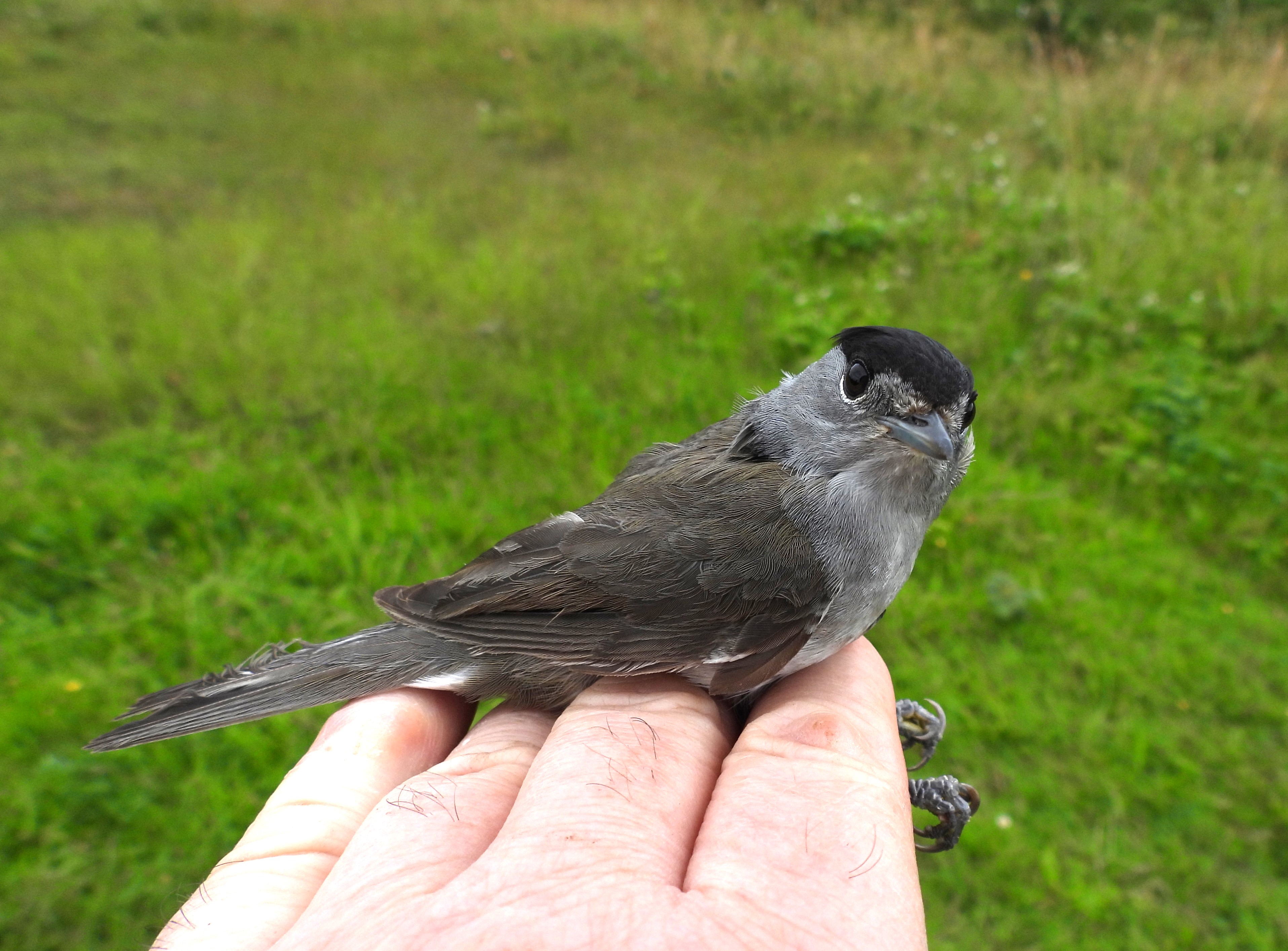
Blackcap - male
 
Out of the 42 birds that we ringed, 31 were juveniles, which is what you would expect for this time of year. However, based upon how poor the breeding season has been in our boxes, we were expecting the worse, and thought that the ratio of juveniles to adults would be lower. It wasn't, which is good news, and fingers crossed that subsequent ringing sessions in August, when migrants from further afield move through, will show similar positive results. 
 
We were particularly pleased that out of the six Sedge Warblers we ringed, five were juveniles, as in recent years they have struggled at this site. The adult male Grey Wagtail was a surprise. We do catch them later in the autumn, but 13th July is probably the earliest that I have ringed one in the autumn. 
 
I've mentioned recently about the seemingly, alarming, lack of butterflies at the moment, and this morning was no different. As we were on site until late morning, I would have expected to see some butterflies on the wing, but all we recorded was a single Gatekeeper. We had another species of Lepidoptera, in the form of a gorgeous Drinker moth that Gail spotted in one of our net rides.
 
Gatekeeper (above & below)
 

Drinker

 
This overdue catch-up finishes with the results of a moth trapping session overnight last night. This morning when Alex, and I checked our garden light trap, we recorded 29 moths, of 12 species:
 
Riband Wave - 7
Small Dusty Wave - 1
Codling Moth - 5
Single-dotted Wave - 1
Scalloped Oak - 1
Dark Arches - 4
Lesser Yellow Underwing - 1
Cabbage Moth - 1
Miller - 1
Common Rustic - 4
Dot Moth - 2
Common Plume - 1
 
Miller
 
We also recorded a Cinnamon Sedge caddisfly. 
 
The forecast is a bit mixed this coming week, isn't it always, but I'm sure I'll be out somewhere. 
 
Over on the right, you will see that I have updated the ringing totals for Fylde Ringing Group up until the end of June. Four new species for the year were ringed during June, and these were Reed Warbler, Sedge Warbler, Willow Warbler and Kestrel.
 
Below you will find the top 2 ringed in June, and the top 7 'movers and shakers' for the year.
 
Top 2 Ringed in June
 
1. Blue Tit - 22
2. Reed Warbler - 11
 
Top 7 Movers and Shakers for the Year
 
1. Siskin - 112 (same position)
2. Blue Tit - 78 (same position)
3. Tree Sparrow - 34 (same position)
    Goldfinch - 34 (same position)
4. Chaffinch - 29 (same position)
5. Great Tit - 27 (same position)
6. Reed Warbler - 11 (straight in)