Friday, 24 May 2024

More Breeding Birds and Those Pesky Norhern Lights

It has been two weeks since I last posted, and I apologise for that, but I have been very busy with more breeding birds. This means lots of time in the field, early starts, and not a great deal of time to sit in front of a computer writing my blog! 

Over two weeks ago now, Gail and I were back at our BBS site near Poulton-Le-Fylde, and we were carrying out an evening survey as part of the new bird survey guidelines that were introduced last year. We didn't record anything particularly unusual, and if I was to pick out some highlights from the 23 species that we recorded, these would be three Song Thrushes, three Chiffchaffs and a Blackcap, and that would be it. 
 
Three days later, I was back at my clients' farm near Slaidburn, carrying out the second breeding wader survey with a couple of RSPB friends/colleagues. It was a nice morning, with 4 oktas cloud cover, and a light southeasterly wind. As always at this site, there are quite a few Willow Warblers and on my survey area I had eleven singing males. Other warblers recorded were two Sedge Warblers, a Blackcap and a Garden Warbler
 
As usual, Raven and Siskin were present, with individual birds moving around, and I had two singing Cuckoos, although I suspect that it might well be just one male moving about. Lots of Brown Hares were a feature of the morning, and I counted at least fifteen different animals, and I know I saw others that I didn't record in my notebook. 
 
Tufted Ducks nest on site, and I had a pair on a quiet pool, tucked out of the way. I had my first Swifts of the year, with two birds slowly (or as slowly as a Swift can) drifting across the farm. Lots of male Orange-tip butterflies were on the wing, and a couple of male Reed Buntings complete the non-wader highlights.
 
Tufted Ducks
 
From a breeding wader perspective, it felt very quiet, and that's probably because the Curlews were busy quietly incubating eggs, but the Lapwings were more of a worry, and I suspect we have lost a few through predation. I only had four adult birds on my patch, and that included a late displaying bird. Two Snipes drumming was good to hear, and I also had two Common Sandpipers, eleven Oystercatchers and a single Redshank
 
Common Sandpiper
 
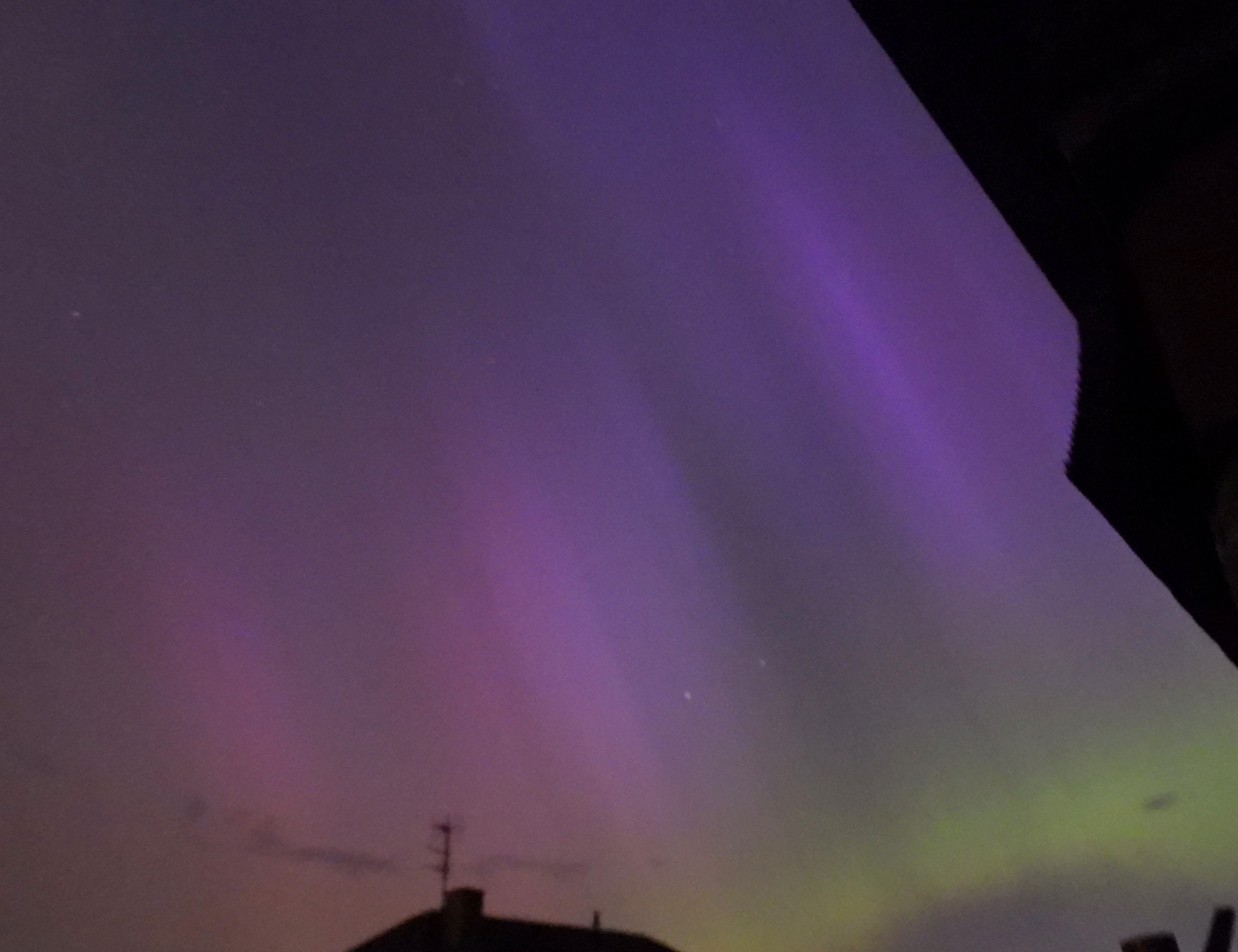
This was also the day that those pesky northern lights made an appearance. I say pesky, mainly because every social media outlet was swamped with photos of this amazing spectacle, as if half the population of the northern hemisphere wanted to show people their photos, which were just the same as everybody else's photos! There were some exceptions, and some people posted some amazing photos, but others not so good. I resisted posting any of mine until now, and I think mine are leaning towards the not so good! It was great to experience though. 


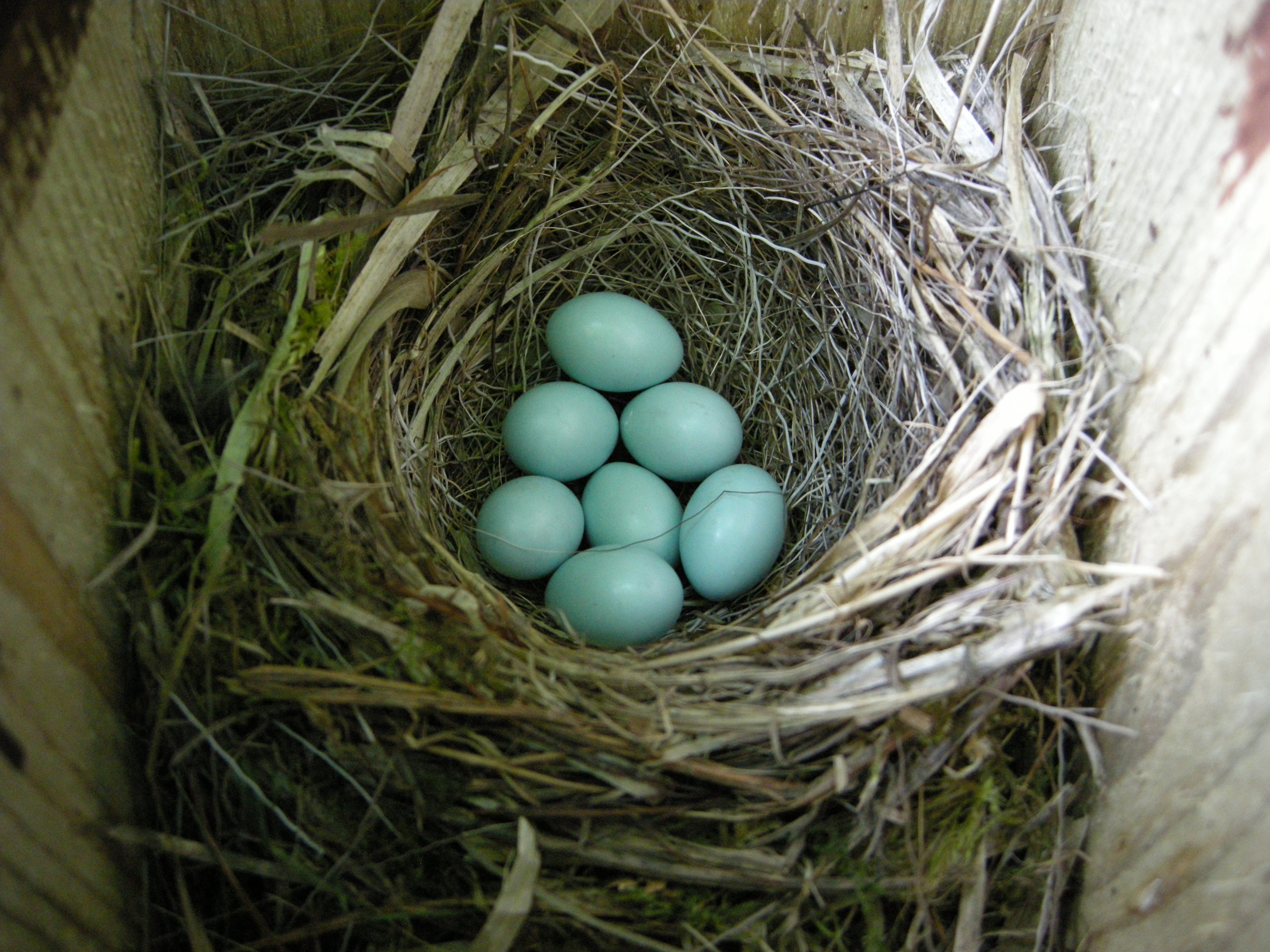
The following day, Gail and I were at our good friend's farm near Nateby checking the Tree Sparrow boxes. We had six boxes occupied by Tree Sparrows, and we ringed 13 chicks, four occupied by Blue Tits and nine by Great Tits. We checked the Kestrel box and found 6 warm eggs, so that's great news!
 
Tree Sparrow chick 
 
Kestrel nest
 
We didn't record much else on our walk round the farm, but a singing Willow Warbler, Whitethroat and three Blackcaps all made it into my notebook. 
 
A week ago, Gail and I returned to a survey site in north Cumbria, near Whitehaven, that we have surveyed on and off since 2019, with 2021 the last time we were there carrying out breeding bird surveys, and it was the first of three breeding bird surveys that we undertook last week.

Even though it takes about two hours to get there, it's quite an enjoyable drive once you get to the Howgills on the M6, and then through the north Lakes along the A66. We called at Tebay services for a coffee at about 5:00 am, and it was nice that the staff remembered me from when I was regular here for several years, at stupid o'clock picking up a coffee!

We started our survey under full cloud cover, with a light north-easterly wind. The first section of our survey is along some cliffs, and although surveying any passing seabirds isn't part of the survey brief, we did have a look on the sea and had a Red-throated Diver and a couple of Gannets.

It is a good site for Stonechats, and we had three males spread across the site, and this probably does mean three pairs. The main species waving the warbler flag was Whitethroat, and we had eight singing males. Is it me, or does there seem to be more Whitethroats around this summer? Other warbler species were two Willow Warblers and a Blackcap. The only raptor species we had was a Sparrowhawk that upset the local Goldfinches, Linnets and Swallows, and three singing Skylarks was noteworthy. 

The following day we were back in the Hodder Valley in Bowland checking our Pied Flycatcher boxes, and we still only have four occupied by Pied Flycatchers, but the number of singing males would suggest a shortage of females. It will be interesting to see what others are recording in the area. All of the Pied Flycatchers were on eggs, and only one female was sitting when we inspected the boxes, and we lifted her off the nest and ringed her. 
 
The woodland where our Pied Flycatcher boxes are located
 
Pied Flycatcher nest with a complete clutch
 

We had one box occupied by a pair of Nuthatches, nine with sitting/brooding female Blue Tits, and four with sitting/brooding Great Tits. One box had a roosting Pipistrelle sp. bat in it, so that will be missed next time. 
 
Nuthatch in residence. Note the mud under the lid and 
around the hole!
 
As we walked through the woodland checking our boxes, we also recorded two singing Blackcaps, a singing Garden Warbler, two Brown Hares, a Great Spotted Woodpecker, and a  singing Chiffchaff.
 
I have been running my moth trap sporadically, and catching a few bits and pieces, with Alder Moth and White Ermine being the highlights. It's more breeding birds for Gail and I tomorrow, as we return to check our Pied Flycatcher boxes, with hopefully a few more females. 
 
Alder Moth
 
White Ermine
 

Following on from reporting on here about the discovery of highly pathogenic avian influenza (HPAI) being found in subantarctic mammals, I read in British Birds May 2024, that it has now been found in penguins on South Georgia. The British Antarctic Survey (BAS) reported that several hundred penguins have tested positive for HPAI, including five Gentoo Penguins and five King Penguins. 

Thankfully, the mortality this has caused for Gentoo Penguins has been localised and brief, but BAS are worried about Macaroni Penguins as they gather in large concentrations to moult. In addition to the penguins, HPAI has now also been found in Antarctic Terns and Snowy Albatrosses, but so far, the effects of the infections appear to remain highly localised so far. Let us hope it remains that way. 

Thursday, 9 May 2024

Breeding Birds

It's May, and migration, what there is of it, is in full swing, and so is nesting activity. Since my last post I have been busy, and it has been mainly concerning breeding birds. 

Nearly a fortnight ago, Gail and I visited the Nature Park to see if we could get into our ringing area yet amongst the reeds and Willow scrub, and the short answer is that we couldn't. The water levels had dropped, but not enough. Perhaps another couple of weeks. 
 
The water levels are now dropping
 
There was a selection of birds in song, including three Cetti's Warblers, two Sedge Warblers, a Great Tit, a Blackcap, a Song Thrush, three Whitethroats, a Reed Warbler, a Chiffchaff, two Skylarks and a Wren

I mentioned in a previous post about some sort of work being carried out on the adjacent landfill site, and bathing on the pools this morning were 129 Herring Gulls, a Great Black-backed Gull and seven Lesser Black-backed Gulls

We had our first chicks out of the nest on our walk round, and these were a pair of Coots with two young, and a pair of Mallards with 8 young. Other birds on the pools included ten Greylag Geese, six Canada Geese, ten Coots, two Little Grebes, nine Tufted Ducks, a Grey Heron, six Mallards and two Moorhens

The Gull raptor alarm call went up, and birds started lifting off the pools to intercept the perceived intruder(s), but it was just two Buzzards that all the excitement was about. Talking of raptors, later in the day I had a female Sparrowhawk drift high east over the garden, and then an obvious local bird, in the form of a male shot through the garden. I just thought I'd mention that our Hedgehog visits every night still. 

The following day, Gail and I headed to my client's farm in Bowland to check on the Lapwing nests that we had put cameras on five days earlier. The first nest looked good, and from the car we could still see the female sitting, so no need to go into the field. On an adjacent field, there was another pair of Lapwings that were chasing everything off that dared to come near, or fly over, but we failed to locate the nest. However, we did have some great views of a Brown Hare, that allowed me to take the photos below. 
 
Brown Hare (above & below)


We checked the location of the second camera that was covering two nests, but we could only see one adult sitting. A quick check of the nests, and we could only find one nest with two warm eggs in, and failed to locate the other. Failing to locate a known nest, generally means that it has been predated. We left the camera in situ, and hoped that it had picked something up when we retrieve it next time. On our way back to the car, we set up another camera overlooking a track through a hedge, to see if any predators, such as Foxes were in the area.

A few observations, as we mainly drove round the farm, included ten Willow Warblers (eight singing), a male Kestrel, eight Brown Hares and a Song Thrush. Of course, the soundtrack to our visit was displaying Curlews and Lapwings, and drumming Snipe. Lovely. 

The following day Gail and I were at our good friends, Robert and Diana's farm near Nateby, to check, and hopefully ring some Tawny Owl chicks. We have three boxes up for Tawny Owls in the woodland on the farm, but often they are occupied by Grey Squirrels. However, in this particular box on the edge of some lovely wet woodland, a Tawny Owl has been noted coming out of the box on and off all winter, so we were hopeful. 

A few days previously, Robert and Diana had been down in the woodland preparing an area for the forest school they run, and had walked past the Tawny box and could hear young calling! We opened the box, and sure enough there were two healthy looking Tawny Owl chicks, about 2 - 3 weeks old, although I am no expert on Tawny Owl chick age. The two birds were duly ringed, and placed back in the box. 
 
Tawny Owl (above & below)


We walked through the wet woodland and crossed over in to a drier area of woodland, that looked beautiful with all the Bluebells in flower. Here we located an active Buzzard nest, and we also noted that the Kestrels were occupying their box as well. So, we just need to know how the Barn Owls are doing, and we can say that at least four pairs of raptors are nesting on the farm. 
 
Bluebells
 
We also had three Chiffchaffs and four Blackcaps singing, and found a Greylag Goose sat on four eggs. All good stuff. 

I've got three Breeding Bird Surveys (BBS) to do workwise this spring/summer, and they have been late commissions, so the one close to home near Poulton-Le-Fylde didn't get its first visit until about ten days ago. Even though it required an 0430 alarm call, it was great to be out in the glorious sunshine, with no wind and a touch of ground frost. 

I didn't record anything spectacular, but there was plenty of birds singing, including eight Chiffchaffs, two Willow Warblers, a Song Thrush, 16 Wrens, a Lesser Whitethroat, a Grasshopper Warbler and two Blackcaps. I recorded nine Little Egrets and nine Grey Herons, a few of which were perched up in some trees adjacent to the site I was surveying. I wasn't sure whether it was roosting behaviour, or a potential nest site, time will tell. 

The following morning, Gail and I were at the second of the BBS sites that I have to do, and this time we were south of the River Ribble in West Lancashire, not too far from Burscough. This meant a 0400 alarm call, but again it was a gloriously sunny, and calm morning. 
 
Again, there was plenty singing, including seven Dunnocks, ten Wrens, five Robins, two Yellowhammers, three Blackcaps, a Whitethroat, two Chiffchaffs and a Song Thrush. There was quite a few Linnets on site, and we recorded at least 20, and a Song Thrush carrying food is proof of a successful local nesting attempt. A Snipe, near a wet flush was a bit of a surprise, and not far from here we found a hairy caterpillar. I can't carry lots of field guides with me, so I didn't have my copy of the Field Guide to the Caterpillars of Great Britain and Ireland (2020), by Barry Henwood and Phil Sterling, and illustrated by the master of invertebrate illustration, Richard Lewington, to hand. So, it was a case of using the internet, and we fairly confidently identified it as a caterpillar of the beautiful moth, Ruby Tiger. By the way, the caterpillar field guide is superb!  
 
Ruby Tiger caterpillar
 
A week ago, I was back at my client's farm in Bowland working with some RSPB colleagues on Curlews. We split up into two teams to see if we could locate any Curlew nests, so that electric predator proof fencing could be erected around the nest. This will be done to improve the chance of a successful nesting attempt, and once the chicks have hatched, the RSPB will be fitting radio transmitters to the chicks so that they can be followed to see what the outcome is. This will hopefully provide us with some essential information on chick survival.

Hilary and I had a look at the top half of the farm, and our other three colleagues looked at the bottom half. We found one pair of Curlews that we suspected were on eggs, judging by the way the female left the field quietly, and without calling, so as not to draw attention to the nest. Unfortunately, we failed to find the nest. We found other Curlews in several fields, but couldn't locate a nest.

We ringed a brood of three Lapwings, and sadly found the fourth chick dead in the field. This is one of the pairs that we had a camera on. Talking of cameras, one of my trail cams picked up a male Ring Ouzel on a few occasions, and you can see some images below. You will need to 'click' to enlarge to see this beautiful 'Mountain Blackbird'. 


The rest of the team found two Curlew nests with eggs, and we joined them to quickly erect the predator fence. We watched from a good distance, and both females returned to the nest to continue with their incubation. Later in the day, a third nest was found, and this was fenced the following day.
 
Electric fence protecting a Curlew nest
 
On our travels around the farm, we recorded a singing Cuckoo, eleven singing Willow Warblers, three Wheatears, a 'chacking' Ring Ouzel, and 20 Siskins.

The following day, Gail and I called in at the Nature Park to check on the water levels in our ringing area, and the water has dropped again. We suspect, that in about a weeks' time we should be able to get in to do some ringing, that's if we aren't too busy with breeding birds! 

We had a walk round, and again it's all about singing birds at the moment, and we had two Cetti's Warblers, five Sedge Warblers, a Song Thrush, two Reed Warblers, three Skylarks, two Grasshopper Warblers, and a Whitethroat. It was good to see that a pair of Stonechat are still about, and a female Sparrowhawk managed to slip through without upsetting the eight Lesser Black-backed Gulls and 92 Herring Gulls. 
 
Stonechat (female above & male below)
 

Five days ago, we carried out our first check of our Pied Flycatcher boxes in the Hodder Valley in Bowland. Our first impressions are that there are more males around than females, based on the number of singing male Pied Flycatchers versus occupied boxes. We had at least six males singing on site, but only three boxes occupied. I suspect over the next couple of weeks this will change. Other occupants of the boxes were a Nuthatch, six Tit sp. (Blue/Great), three Blue Tits and five Great Tits. We also had one box occupied by a queen Wasp sp., and another by Tree Bumblebees, all welcome. 

The first Pied Flycatcher eggs of the year

We also had a Garden Warbler, three Blackcaps, a Goldcrest, a Chiffchaff, and two Common Sandpipers on the river. We also found a Buzzards nest high up in a Scots Pine. Wandering through the woodland, with eyes cast occasionally to the floor, we recorded Bluebell, Lesser Celandine, Wood Speedwell, Herb Robert, Wood-sorrel, Ramsons, Dog's Mercury, Bugle, Red Campion, Lesser Stitchwort, Early Dog Violet, Water Avens and Wood Forget-me-not, all flowering. All good indicators of ancient semi-natural woodland. Oh, and we had plenty of male Orange-tip butterflies on the wing as well. 

At weekend I had a migration 'fix' with three hours at the coastal farm fields at Larkholme. I was there just after sunrise, and there was a light southerly breeze and full cloud cover. Further out to sea it was a bit murky, and I suspect this was hampering some of the vis and sea passage.

Just as I was walking to my vantage point overlooking both the sea and the farm fields, I had 370 Pink-footed Geese heading north, and a further 110 later on at sea. This got me thinking that it was probably only June and July, and sometimes August, that you can't see Pink-footed Geese somewhere in Lancashire! 
 
Pink-footed Geese overhead (above), and over the sea (below)


The rest of the vis was made up of 14 Swallows, two Linnets, two Whimbrel and two Alba Wags. Before I get into more birds, I also had a lovely Harbour Porpoise close-in. I say close-in, I had great views through my scope, but it wasn't close enough for a pic. It was the same with the summer plumaged Red-throated Divers that I had.

The main feature on the sea, or should I say above, was the passage of Sandwich Terns. I had 146, all heading south. Some would stop and feed, hovering and then diving into the water. Some fishing attempts were successful, others weren't. 

As I've hinted at above, the other highlight was the three summer plumaged Red-throated Divers that I had on the 'mill pond' of a sea, and I had a couple more head north. The supporting cast included 143 Common Scoters, a male Eider, two male Mallards, 40 Dunlin south, 21 Gannets, an Auk sp., and a male Teal.
 
Mallards on the sea
 
As the tide ran in, Turnstones started gathering on the rock groynes until these too were covered, and my peak count was 76. I also had three Sanderlings and 86 Oystercatchers

Turnstones (above & below)
 

Not many rocks left now for the Turnstones to roost on
 
The  most obvious grounded migrants this morning were the nine male and six female Wheatears that I had. On my walk round the farm fields, I recorded four Whitethroats, three Sedge Warblers, a Lesser Whitethroat and two Willow Warblers, but some of these will undoubtedly have been breeders on the site. 
 
Wheatear(s) (above & below)
 

 I've had my moth trap out a few times recently, but it has been quiet with just the odd Garden Carpet, Early Grey, Light Brown Apple Moth, Cabbage Moth, several Carcina quercanas and a few Caddisflies, probably Limnephilus auricula
 
Cabbage Moth
 
It's going to be about more breeding birds over the next few weeks, and before we know it, we'll be in to autumn! 

Over on the right you will see that I have updated the ringing totals for Fylde Ringing Group up until the end of April. Two new species for the year were ringed during April, and these were Tawny Owl and Lapwing.

Monday, 22 April 2024

Upland Waders and a Bit of Coastal Migration

It has been ten days since my last post, and that's because I've been out most days, and have been struggling to find time to do a blog post. So, better late than never as they say! I've been carrying out some upland wader work on my client's farm, combined with some coastal migration monitoring, and a few walks down the Wyre estuary. The usual stuff.

Rewinding back to the 12th April, Gail and I had one of our regular walks along the Quay and estuary, but under cold grey skies, with a blustery south-westerly wind, and it was quiet. Hardly worth mentioning in fact, but we did have a Tree Pipit over, so that is perhaps worth a mention. We recorded a few plants flowering, including Dove's-foot Cranesbill, Red Valarian, Ribwort Plantain, Rue-leaved Saxifrage and Sticky Mouse-ear, and I am going to leave it at that. We had another visit to the Quay a couple of days later, and saw even less!

Over the past week or so, we have been having 1 or 2 Hedgehogs coming to our garden 'hog' feeding station, which is nice, but not so nice is a poor female Chaffinch regularly visiting the garden suffering with Fringilla Papillomavirus. Her legs look nasty with it. 

Early last week, myself and a couple of RSPB colleagues, carried out the first of three breeding wader surveys at my client's farm in Bowland. It was a great morning for it, with 2 oktas cloud cover, and a light north-westerly wind. 

Over our three survey sections, covering only half of the farm, we estimated:

Redshank - 3 pairs
Lapwing - 10 pairs 
Curlew - 8 pairs
Oystercatcher - 7 pairs
Snipe - 1 pair
Common Sandpiper - 1 pair
 
Of course, there's a long way to go yet between where we are now, and successful fledging of chicks. We checked the two Lapwing nests with cameras on them, and both had been predated! The pair that I checked had started again in the field directly behind, so I'll keep my fingers crossed for them. 
 
In addition to the waders that I surveyed, I also had a few other bits and pieces, including two Buzzards, 12 Brown Hares, ten Willow Warblers (9 singing), a female Goosander, a Raven, a Kestrel and a male Redstart.
 
The following morning, I was at the coastal farm fields and school close to home. I was hoping that the south-easterly wind would produce some birds, but the favourable wind direction was negated by the cold and clear conditions. As a result, I didn't record a single grounded migrant.
 
There was some visible migration, but it was light, and consisted of 282 Pink-footed Geese (94 north out at sea), seven Linnets, three Meadow Pipits, three Siskins and two Swallows. The sea was equally as quiet, with just 11 Eiders, a Guillemot, 24 Common Scoters, four Red-throated Divers and two Sandwich Terns.
 
Linnet
 
At the end of last week, Gav and I were back in Bowland at my client's farm, looking for Lapwing nests to monitor with cameras. We found three active nests; 2 with full clutches of 4 eggs being incubated, and another with 3 cold eggs, which would be 4 the following day, and then the female would start the incubation. We put cameras on all three nests. 
 
In the same field, we found another Lapwing nest with four cold eggs, with the remains of an adult next to the nest. All that was left was a leg and a few tail feathers. The bird didn't look to have been chewed, so this pointed to predation by a raptor, and also the eggs were still there, again pointing towards a raptor. I've included a few pictures below of the nests, and the predated Lapwing. That's how it goes sometimes. 
 
Lapwing nest, with 4 warm, incubated eggs
 
Remains of predated Lapwing
 
Whilst we were searching for Lapwing nests, we had Snipe drumming in the same field, and a pair of Curlews engaging in some pre-mating display. All good stuff. 
 
Close to the car, Gav heard the 'chack, chack' of a Ring Ouzel, and we then had a minute or two of pretty awful views of a male and female moving through the hedge. Nice though. 
 
Saturday morning saw Gail and I back along the Quay and estuary. Another quiet one, although we did have 66 Redshanks, three Knots and two White Wagtails. The sun was out, and it brought out three Small Tortoiseshells and two Small Whites
 
Small Tortoiseshell
 
Small White
 

I ran my newly treated (see picture below) moth trap for just the second time this spring over that night and the following morning, and caught three moths of three species; Hebrew Character, Early Grey and Herald. Below are some pictures of the Herald, one usual shot, and a couple from different angles. 


I love the black and white stripey legs
 
On Sunday morning, I had a bit of coastal migration action at the farm fields and school at Larkholme. When I arrived at first light, I had full cloud cover and it was calm. Shortly after I set up at my sea watching and vis location it started raining with a light drizzle, and it remained like that for the next three hours.  

Surprisingly, given the drizzly and murky conditions, there was some vis, mainly in the form of hirundines, and heading in a northerly direction I had 16 Swallows (eight out at sea), an Alba Wag, a Carrion Crow, 3 Goldfinches, two Linnets, a White Wagtail and two Siskins. 

The sea provided the greatest interest, not in numbers, but in a first for me for the site. The sea was absolutely flat calm, just like a mill pond, and because of this, it was easy to pick out birds on the water. I had seen a group of three Teal, and when scanning left, I picked up another couple of dabbling ducks. Even with my scope, I couldn't properly make them out, although I had my suspicions. I pulled out my Nikon P950 and cranked it up to x83, and took an awful picture of the two ducks. However, when I zoomed in on the image on the back of the camera, I could make out the white crescent of a male Garganey! So, I suspect a pair of Garganey heading north had taken advantage of the calm conditions and dropped in for a rest. 

In addition to the Garganey and Teal, the sea produced 25 Sandwich Terns, four Red-throated Divers, three Eiders, three Shelducks, 66 Common Scoters, six Cormorants and eleven Dunlin

Whimbrel were also a feature of the morning. It started off by me hearing several calling birds that I couldn't see, so they had to go down in my notebook as singles, and then I had groups of 10, 6, 2 and three that tried to land on the beach, but decided against it. In total I had 24. 
 
Whimbrel
 
I had an odd selection of grounded migrants as well. I was busy looking down my scope when I thought I heard some Twite calling. At first, I dismissed it (I don't know why, as I have had them grounded in spring along here before), and then I looked round to see a group of six flying towards me on the inland side of the sea wall. They perched up on a wooden gate, and then dropped into the field to feed. After a short while they took off, and I lost them as they drifted east low over the field. 
 
Twite
 
I then had some hirundines grounded. I say grounded, it was more of a case of the drizzle dropping four House Martins, that were then held low by the weather conditions, and spent the rest of the time I was sea-watching hawking aerial insects. To the grounded list I added a reeling Grasshopper Warbler, two Lesser Redpolls and two Willow Warblers. It was now time to head home. 

It was pleasing, and probably more surprising, to read in April's British Birds, that both the British and Scottish Governments announced in January 2024, that industrial sandeel-fishing will no longer be permitted in English and Scottish waters. And about time too! 

Lots of seabirds rely on sandeels for food, including Kittiwakes, Puffins, Guillemots, as well as marine mammals, such as Minke Whales, Harbour Porpoises and harbour Seals. This announcement will help in safeguarding the future of these species.

Thursday, 11 April 2024

Pinkies Ahead Of The Rain

Yesterday morning I headed to the coastal farm fields, for a bit of all round migration monitoring, or staring at the sea and the sky, drinking coffee, and seeing b*gger all, as is often the case! It was cold at first light, and the wind started off from the south-east, 10 - 15 mph, and moved round to a south-westerly direction.
 
With the exception of the Pink-footed Geese, the visible migration was very light, with low numbers, and few species involved. A weather front was heading north, with rain forecast to arrive between 0900 and 1000, so I suspect this was having a blocking effect, and preventing any birds moving from the south. My meagre totals were 14 Meadow Pipits, six Siskins and five Linnets.
 
Meadow Pipit
 
The Pink-footed Geese movement was interesting, and it seemed that they were moving ahead of the forecast rain front. Birds were heading north out at sea, as well as directly over me on the coast. I counted 740 in total, with 249 of these birds at sea, and the other 491 directly over me. 
 
Pink-footed Geese
 
It's a pity that the movement at sea could not be considered interesting, as it was very quiet...again! I had eight Common Scoters, six Gannets, three Eiders and three Whimbrel.
 
In one of the tidal pools directly opposite my vantage point, I enjoyed watching a Little Egret feeding. It would slowly walk through the water, spot something and either run, or spin round, perhaps holding a wing out to shade the water, then stab at its prey item with lightning speed. I hope you agree that the images I captured below, give you a flavour of this. 


I decided to have a walk round the fields and hedgerows, before the rain came in, to look for any grounded migrants, but it was quiet. I had two male Wheatears on the sea wall, and then a male Stonechat and two Willow Warblers. My timing was perfect, as just a couple of minutes from my car, it started to rain heavily.  

Stonechat

Late morning today, Gail and I decided to pay a visit to the Nature Park to see if any Sedge Warblers had arrived, and they had, with just one singing from some Willow scrub and reeds at the edge of one of the pools. From this same location, I had four Willow Warblers and a male Blackcap. So, two new species of summer migrant for us, for the year. 
 
Singing Skylarks and Cetti's Warblers were the constant soundscape for the hour or so that we were there, and we had three and four respectively. Things have quietened down on the pools now with the Coots, Moorhens and Grebes on nests, but we did have 12 Coots, ten Tufted Ducks, three Moorhens and 11 Mallards
 
A male Sparrowhawk drifted north whilst we were looking over the main pool, but whether it was a migrant or not, I'm not sure. We had two male Stonechats, or was that two sightings of the same male? They were virtually at either end of the site, and one was singing, and one wasn't. So, who knows?
 
We spent some time looking at the invertebrates on the Alexanders along the edge of the saltmarsh, and again there were some interesting species on the flowers. If we identified them correctly, we had two species of Ichneumon wasps; three Ichneumon stramentor and a single Ophion scutellaris. Both magnificent beasties. There were numerous other species of small flies, including at least six Yellow Dung Flies, one with prey, and we had a Tawny Mining Bee. All very common, but great to see and record. 
 
Ichneumon stramentor (above & below). Click to enlarge.
 

Ophion scutellaris (above & below)


Yellow Dung Fly (above & below). With prey above.


Interestingly, there are 2,500 species of Ichneumon species in the UK, which is almost ten times our bee diversity. Many species visit flowers, particularly umbellifers, and they can therefore be quite significant pollinators of plant species in this group. 
 
I had my first garden butterfly species of the spring this afternoon, when a Red Admiral whizzed through the garden, heading in a general northerly direction. I was sat in the garden hoping for a raptor or two over, but it wasn't to be. 
 
I read with sadness that the deadly Highly Pathogenic Avian Influenza (HPAI) that has been decimating sea-bird populations, has now been confirmed in mammals in the subantarctic. The disease was detected in January 2024 in Southern Elephant Seals and Antarctic Fur Seals in South Georgia. 
 
Scientists in this subantarctic region have been testing for bird flu in mammals since cases were first recorded there following the deaths of several Brown Skuas in October 2023. Analysis from infected birds demonstrates that the virus has most likely been introduced through migratory birds from South America. A very sad state of affairs.