Monday, 12 October 2020

Migration Action In Miniature

I wasn't sure what time the rain was going to come in this morning, the forecast wasn't clear. Depending on which forecast you looked at, it could be around dawn, or an hour or two after. Was there a chance that it would drop a few birds in, or was that south-westerly wind going to be a problem?

I drove into the cemetery under full cloud cover, with a moderate south-westerly wind. Some of the trees and shrubs were moving back and forth, and it looked far from conducive for seeing a few migrants. 
 
First up was the ubiquitous ticking Robins, autumn wouldn't be autumn without the soundtrack of ticking Robins, and five were 'ticking' away on my walk round this morning. A few Goldcrests called, four to be exact, and the same number of Coal Tits were never far away from the 'crests. 
 
I'd walked the western side of the cemetery, and I was walking along the northern perimeter, before cutting across the middle and heading for the trees and shrubs that form the southern boundary, when I heard the distinctive call of a Brambling as it headed east. 
 
There was nothing along the southern boundary, and as I continued on my circuit heading back along the western boundary, I could hear Whooper Swans calling, and looked up to see a pair winging their way south.
 
Whooper Swans
 
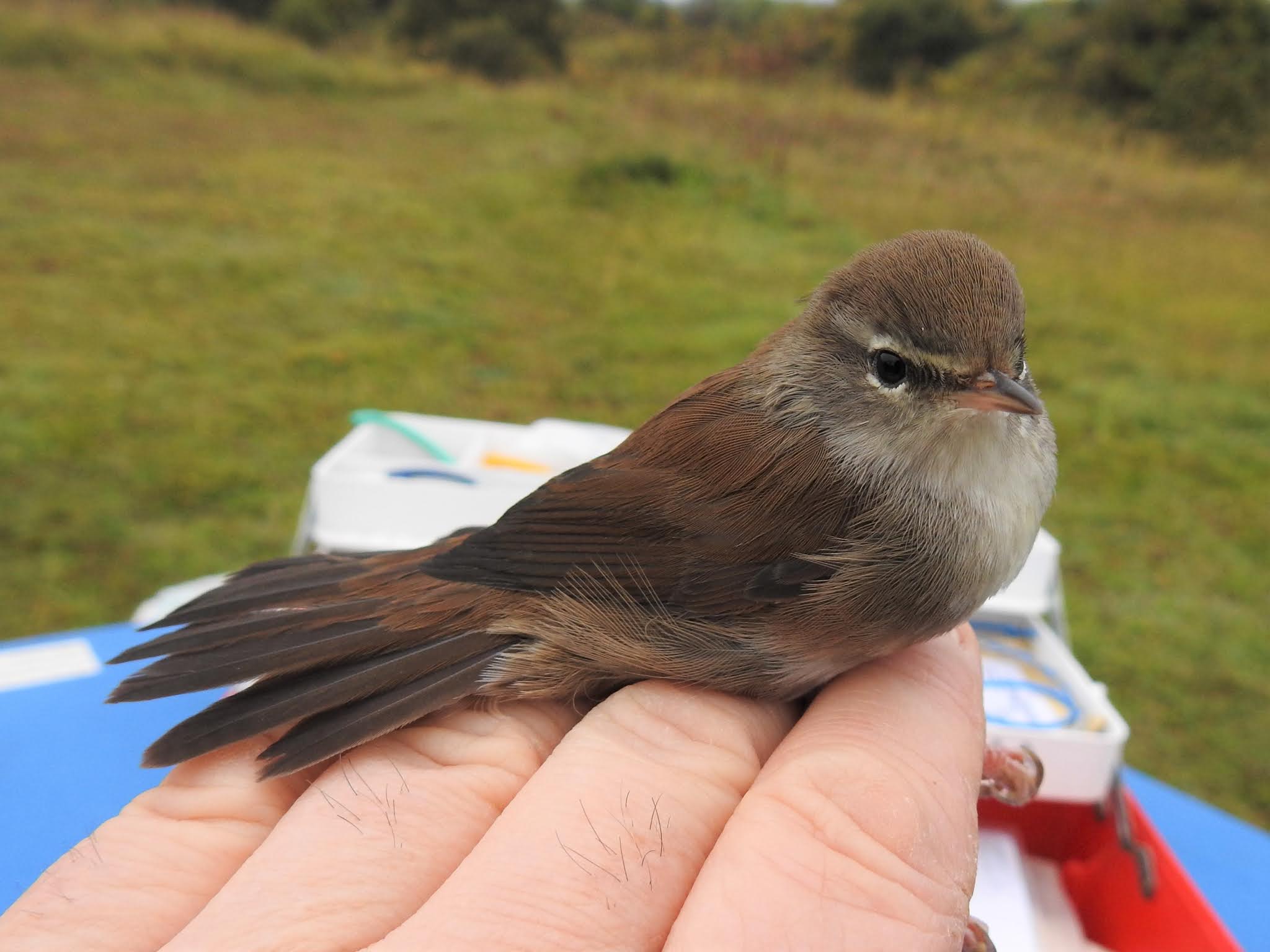
So far, there had been no rain, and at this point I bumped into Ian, and it started to rain. Straight away six Redwings and a Song Thrush dropped out of the sky, and a party of eight Long-tailed Tits carrying a Chiffchaff (not literally), moved through the trees. So, a little bit of migration action in miniature!
 
It was more of the same in the coastal park with more ticking Robins, Goldcrests, Coal Tits and a migrant Song Thrush. I headed to the coastal farm fields, and the rain had set in now, so I saw very little else. I did have a pair of Stonechats, and as always with Stonechats at this time of year, it raises the questions of whether they were migrants, local breeders or a soon to be over-wintering pair. The only way to answer that, is to see if they are still there over the next few days and weeks. 
 
I bumped into a party of ten Long-tailed Tits, but they weren't carrying anything other than a couple of Blue Tits. Four Blackbirds and a Song Thrush feeding on Hawthorn berries along the big hedge by the ditch had a 'migrant' feel about them, or was that down to the morning, and a small flock of 22 Goldfinches also made it into my notebook. 
 
I returned to my car via the shore and a group of twelve Turnstones were roosting on some exposed rocks not covered by the tide. 
 
At the moment it looks like it's remaining northerly until Friday, then switching to easterly, and the wind is dropping, so hopefully that will bring a few birds in. 

Thursday, 8 October 2020

Doing The Rounds

For the past two days I have been out at first light doing the rounds irrespective of the weather, because it is October after all! I joined a meeting of the Highland branch of the Scottish Ornithologists Club (SOC) yesterday evening, via Zoom, to hear a talk by John Callandine on Short-eared Owls, and it was brilliant by the way, I learned so much. However, the main reason I mention this is because before John gave his presentation, some members were saying what they were seeing in their gardens. The locations of these gardens were spread across Orkney, Caithness, Sutherland etc, and most people were reporting lots of Yellow-browed Warblers in their gardens. One person would say they had three in their garden yesterday, and another person would say they had six! We do get Yellow-browed Warblers, and numbers are increasing, and there has probably been at least three seen in the past few days within the Obs recording area, but they have been hard won, and it takes a lot of effort continually doing the rounds day after day. Some lucky people due to their geographic location in Britain, can just open their curtains in the morning, and see one of these eastern sprites!
 
It was cold yesterday morning, with virtual full cloud cover, and a 20 mph north-westerly wind. I'm not sure why I bothered going out really, hang on I remember, because it's October, the migration month! As usual I started off in the cemetery, and the trees were whipping from side to side, making it pretty difficult to detect any birds, if any birds were indeed around! 

I heard some Carrion Crows alarm calling and I could see that they were mobbing and chasing a female Sparrowhawk, in fact it went on for several minutes. They were chasing her over and through the headstones, round the trees, but they were no match for her flying skills. Occasionally she would have enough, turn, and chase one of the Crows. Eventually it all calmed down, and peace ensued. 
 
Walking along the northern edge of the cemetery, I saw a small bird fly from some of the Japanese rose that has established along here (the Greenfinches love the hips on it at this time of year), and I thought that looked interesting, a bit chat-like. It perched up out in the open, and I lifted my bins, and it was a male Stonechat. Actually, I was quite pleased with that, as they are a good bird for the cemetery. 
 
There was nothing else grounded other than four Goldcrests, so I moved on to the coastal park. It was even quieter in here, with just a single Goldcrest to add. In fact, there was a lot of disturbance due to building work, as the local authority secured some Lottery money to restore elements of the park. 
 
I wasn't exactly enthused by the morning's sightings, so I cut my losses and headed home for a coffee!
 
The second day of doing the rounds, saw me start off again at first light at the cemetery under four oktas cloud cover, with a 15 mph north-easterly wind. A north-easterly is a tricky direction in the cemetery, as most of the cover is along the south, west and north sides leaving it exposed from the east. In fact, I really struggled to find any grounded migrants, other than three Robins and three Coal Tits. 
 
Robin
 
A Sparrowhawk was present again, but this time it was a young male, and it didn't have a Corvid escort. I moved on to the coastal park, knowing it was sheltered in places when the wind is coming from a northerly direction, but all I could add was a single Goldcrest. I came across the Red Admiral below, with its 'solar panels' open, catching some rays in a sheltered spot. In fact, in the bright morning sun, it looked more orangey-red, rather than reddish-orange!
 
Red Admiral
 
The farm fields beckoned, so I headed there for a walk around the fields and hedges. I started off by walking along the sea wall and I had a cursory look on the sea, and had a male Eider, and a Razorbill still virtually in summer plumage, relatively close in. It was nice to see a Razorbill on the patch so close in, as they are often just whizzing north or south in spring and autumn. 
 
The view from the farm fields looking across the Bay to the Furness peninsula
 
I had my first Whooper Swans of the autumn from this spot as well, with five birds heading south along way out to sea. Talking of wildfowl, I also had a flock of 200 Pink-footed Geese head south, contrasting nicely against the azure sky.
 
Pink-footed Geese
 
There was next to no vis, and a species that you normally associate with vis in autumn, the Meadow Pipit was a grounded migrant this morning, and at least 50 were in the wet fields. The four Robins I had, could have been grounded, but the Wheatear on the sea wall definitely was. 

It's a bit of an iffy forecast again for tomorrow, but unless it is absolutely awful, I'll get out, because it is October after all! Who keeps saying that?

Over on the right you will see that I have updated the ringing totals for Fylde Ringing Group up until the end of September. Only one new species new for the year was ringed during September, and that was Grey Wagtail.

Below, as usual, you will find the top five ringed for the month, and the top ten 'movers and shakers' for the year.

Top 5 Ringed in September

1. Meadow Pipit - 101
2. Greenfinch - 35
3. Blue Tit - 20
4. Chiffchaff - 15
5. Goldcrest - 14

Top 10 Movers and Shakers for the Year

1. Linnet - 128 (same position)
2. Meadow Pipit - 116 (straight in)
3. Willow Warbler - 92 (down from 2nd)
4. Blue Tit - 80 (up from 5th)
5. Pied Flycatcher - 73 (down from 3rd)
6. Great Tit - 66 (same position)
7. Sand Martin - 63 (down from 4th)
8. Blackcap - 56 (down from 7th)
9. Greenfinch - 54 (straight in)
10. Goldfinch - 51 (down from 8th)  

Monday, 5 October 2020

North From Here

I headed to the cemetery for first light, although first light isn't that early at this time year with sunrise just after 7:00 a.m., to look for grounded migrants. At first light, there was one okta cloud cover with a 10-15 mph NW wind. 

Grounded migrants were thin on the ground with just a single Redwing, three Robins, two Goldcrests and two Coal Tits falling into that category.
 
There was some vis, and interestingly everything was heading north from here into the wind. It's almost as if direction of travel isn't that important for some of the partial migrants that I recorded, but more important was gaining the extra lift by flying into wind (increased air flow over wings = extra lift with little energy expenditure). So, heading north, which after a few wing beats would take the birds out over Morecambe Bay, I had two Grey Wagtails, 23 Linnets, four Goldfinches, 34 Chaffinches, three Greenfinches, two Siskins, a Reed Bunting, a Meadow Pipit (why so few Mipits in early October?), a Carrion Crow and twenty Jackdaws.
 
I was going to go to the coastal park next, but a text from Ian telling me not to bother, as there were workmen in the park with radios blasting out, meant that I did a u-turn and headed to the coastal farm fields. 

The vis had really quietened off, and you could argue that it really never got going, but what I did have was a mixture of birds both heading north in to the wind, and also travelling in the classic autumnal direction of south. Of interest were nine Skylarks (3N & 6S) and 44 Pink-footed Geese south.
 
Pink-footed Geese
 
I did have a quick look on the sea, but I was plagued with heat haze and after just three Auk sp. and four Common Scoters I gave up. Grounded migrants were limited to a Wheatear, a Coal Tit, six Robins, three 'agitated' Dunnocks and another Redwing. 
 
The farm fields are listed as a Biological Heritage Site (think Site of Importance for Nature in counties outside Lancashire) for their botanical interest, particularly surrounding some of the ditches, but also for the population of Roesel's Buch-cricket that occurs here. Until the early 20th century Roesel's Bush-cricket had a southeast distribution, but they have expanded slowly north and west. It favours damp meadows and grassland, and this is what is found here. They were in fine song this morning, and their long, monotonous, mechanical song accompanied me in places on my walk round. 
 
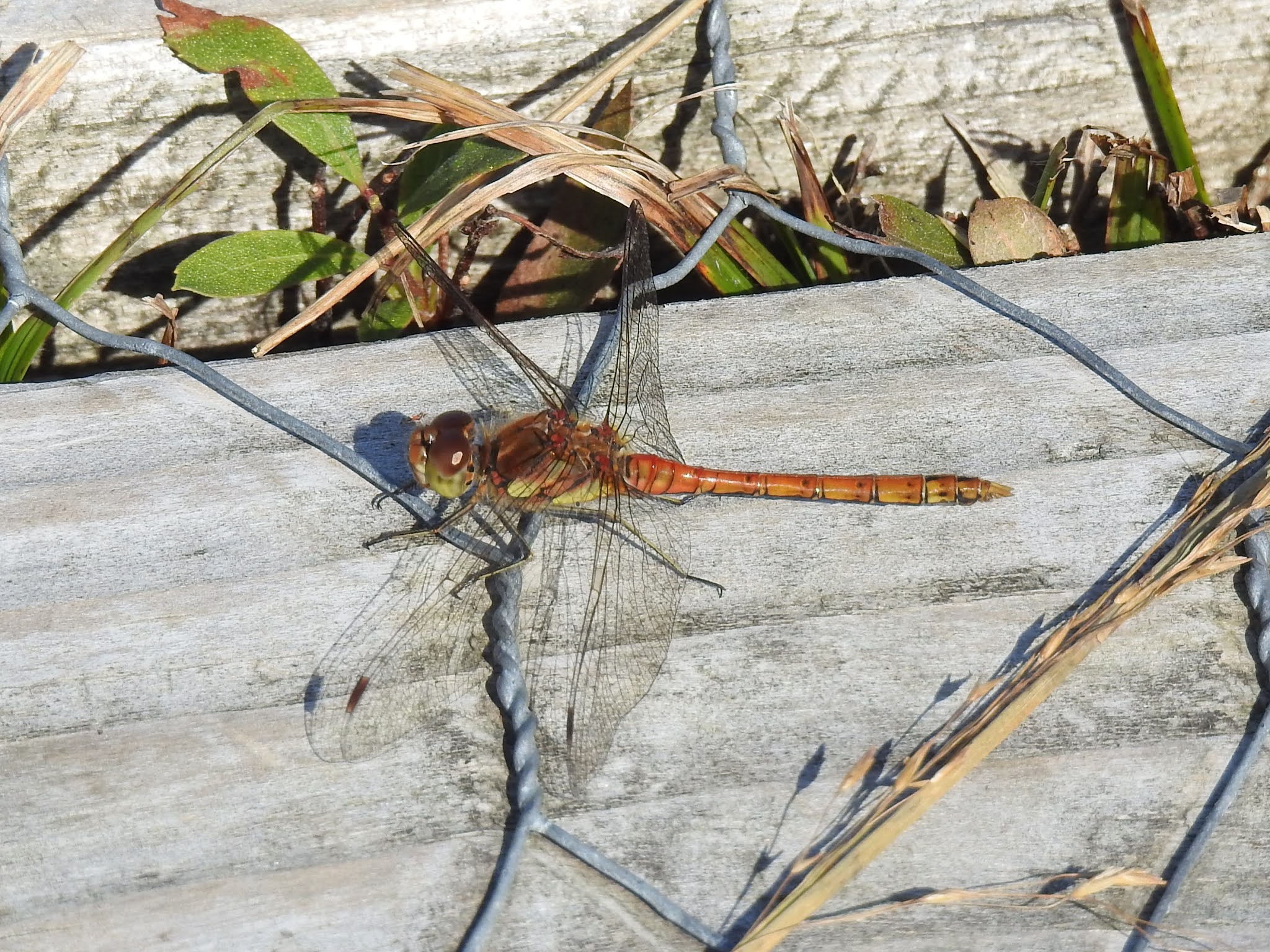
It warmed up as the morning progressed and I had a lovely Migrant Hawker sunning itself on the south facing side of a scrubby Hawthorn hedge. See picture below.
 
Migrant Hawker
 
I also photographed another invertebrate this morning, which was a Common/Garden Snail making its way along the mollusc motorway, aka the sea wall to you and me. 
 
Common Snail motoring along the mollusc motorway (above & below)


It's not a brilliant forecast for the morning, but it is October after all, so I'll try and make the effort and get out for a couple of hours.

Friday, 2 October 2020

Short and Sweet

It 'felt' quiet this morning, as I walked along the sea wall to my sea-watching/vis mig point at the farm fields next to the school, within the Obs recording area. Sometimes it can feel quiet, and be the opposite, but this morning it felt quiet, and it was quiet.
 
I had a conversation with Ian during the  morning, as I walked the farm fields checking the hedgerows for any grounded migrants, and I said that I had given it an hour and decided to give it up, and Ian replied that giving it an hour is a good barometer to see if ones 'it felt quiet' hunch is correct. And I quite agree, and I gave it an hour and a half, and it was still quiet.

So, let's rewind a bit to see what I didn't see during my short and sweet outing this morning. The morning dawned with six oktas cloud cover, with a cold 15 mph north-easterly wind. Northerlies are an awful wind direction for us, unless there is more easterly than northerly in it, and this morning there wasn't.
 
As I walked to my observation point, I thought I might at least have a Wheatear or two on the sea wall, but I didn't, but I did have a Turnstone that perplexed a dog walker, as I could see him looking at it, and by his expression I could tell that he wondered what it was. 
 
Turnstone
 
I got into position and started to see and hear a trickle of visible migration. To cut to the chase, I had four Grey Wags, six Alba Wags, 460 Pink-footed Geese, 71 Meadow Pipits and two Skylarks all heading anywhere between east and south. 
 
A good number of the Meadow Pipits were coming in off the sea, and I have always wondered if on clear conditions they can cross the Irish Sea, and by default Liverpool and Morecambe Bay, from the Mull of Galloway (via the Isle of Man) or Walney Island (western extremity of the Furness peninsula), and make landfall in North Wales, or anywhere east of that line.
 
Today Walney Island was very clear, but I couldn't make out the North Wales coast, so maybe they were setting off and deciding to make landfall, as they couldn't see across Liverpool Bay to Merseyside or North Wales. I don't know the answer, and I'm glad that I don't, as it keeps the magic of migration alive for me!
 
The sea was equally as quiet with just four Pintails, 20 Common Scoters and two Guillemots entered into my notebook. After about an hour I gave up looking on the sea, and had a walk along the hedges of the farm fields as I mentioned earlier. I didn't detect anything grounded other than five Robins perhaps, and my telephone conversation with Ian had confirmed there wasn't much grounded stuff about, as he had checked the coastal park and cemetery, with just a couple of Goldcrests for his efforts.
 
However, it was whilst walking the hedges that I recorded the best bird of the morning, and it was a new species for me at this particular sub-site, in the form of a female Goosander! She was flying across the peninsula from west to east, so from the sea to the estuary. Nothing very exiting in the grand scheme of things of course, but it did brighten up my morning.
 
Later in the afternoon Gail and I had a walk along the coast along the edge of the golf course, and we had two Stonechats, a Wheatear and a Swallow. So, a few migrants at least! 

Stonechat
 
Wheatear
 

The forecast for tomorrow is for a 10 mph NNW wind, with light rain from just before first light. There is a chance that it might produce something, so if it isn't absolutely throwing it down, I'll head out because I quite enjoy looking for migrants in the rain.  

Tuesday, 29 September 2020

Two Different Days

Saturday morning was glorious, with clear skies and a light south-easterly wind, and as there was a tide, I headed to the Point for a bit of a sea and a vis watch. However, if I fast forward an hour and a half, I was walking away from the Point and I bumped in to Ian who said to me "that's not a good sign", and I replied, "it was crap"! Ian asked me whether that was the sea or the vis, and I said both! So, what happened?

Even though it was a glorious morning, there was a heat haze at sea, it's often the case at this time of the year when you get the temperature variation between the relatively warm sea and the cold air, making any observation of birds difficult. The crystal-clear conditions vertically, meant that virtually all of the vis was so high, that it was undetectable. 

The view from the Point across Morecambe Bay towards the Furness peninsula

In fact, the only vis that I recorded were two Grey Wagtails and six Skylarks that were barely visible! The sea was equally quiet with just nine Eiders, 33 Common Scoters, a Red-throated Diver and five Shelducks. An Atlantic Grey Seal bobbing up and down as the tide ran in, could also be added to this list. 

I decided to have a look in the cemetery, just in case there was anything of note migrant-wise, although I knew there wouldn't be! Looking resplendent in the morning sunshine were three Small Copper butterflies, that actually made my morning! Every time my shadow passed over them as I tried to get closer with my camera, they were off! So, I had to stretch my arms out not to cause a shadow, and to get the sun behind my camera.
 
 
Small Copper

As I was watching the Small Coppers, all the Starlings started alarm calling, and a male Sparrowhawk shot through; superb! I never tire of observing these cracking little raptors! I had another barely visible group of seven Skylarks heading south-east, and in addition to this a Greenfinch, five Alba Wags and a Chaffinch headed in the same direction.

Surprisingly there was two grounded migrants, two Goldcrests!

Yesterday, I was at the pools before first light for a ringing session, and as I unloaded my gear from my car under six oktas cloud cover with 5 - 10 mph SE wind, I could hear Redwings calling. I don't know how many were involved, I could just hear them. Even though they are heralding the approach of Winter, I do love to see and hear them at this time of year. In fact, they epitomise Autumn to me!
 
The Starlings are still roosting, and numbers might have just crept up a bit, as I had two waves of about 2,500 birds exiting the roost, so 5,000 roosting is a tad more than last time. 
 
Probably as a result of me parking fairly close to the scrape in the half-light, I spooked the 70 or so Greylag Geese that were roosting on the scrape, and in fact that is the first time that I have known Greylags to roost on there. Talking of geese, for the first hour that I was on site I could hear Pink-footed Geese calling, probably moving on from their estuarine roost. Then I had a group of 73 birds that looked to be dropping on to fields on the other side of the river, and then c.500 birds were in the air, presumably flushed by something or somebody!
 
I had very little vis, again, so two different days, but still little vis. The vis I did record comprised of an Alba Wagtail, two Grey Wagtails, 26 Woodpigeons, a Carrion Crow, seven Greenfinches and two Linnets.
 
The only grounded migrant I had was a Goldcrest, and a Great Spotted Woodpecker and six Long-tailed Tits made it into my notebook.
 
I ringed twenty birds as follows:
 
Robin - 1
Cetti's Warbler - 2
Great Tit - 2
Chaffinch - 2
Goldfinch - 1
Coal Tit - 3
Blue Tit - 3
Greenfinch - 6
 
Cetti's Warbler
 
Coal Tit

I was going to go to the pools ringing again this morning, but when I got up at 5:45 a.m. I could see that it was quite foggy, and this would lead to next to no birds, and soggy nets, so I saved it for another day.

Wednesday, 23 September 2020

Back To Back

Sunday and Monday saw me having back to back ringing sessions at the pools; Sunday with Alice, and Monday on my own. On Sunday we had 4 oktas cloud cover, with a light easterly wind, and on Monday I had clear skies with a light southeasterly. However, on both days the wind strength increased quite quickly, and affected our catching rate.

For ease, I have combined the ringing totals for both days below (recaptures in brackets):

Greenfinch - 18
Dunnock - 1
Chiffchaff - 1 (1)
Long-tailed Tit - 1 (5)
Robin - 2
Chaffinch - 1
Goldfinch - 2
Lesser Redpoll - 2
Reed Warbler - 1
Blue Tit - 1
Blackcap - 2
Robin - 1

 
Lesser Redpoll
 

On both days there was some vis, and as always when you are ringing, you inevitably miss birds that are going over. For the vis totals I have done the same again, and amalgamated the totals for both days. It's not just me being lazy, but also it makes them look more impressive! 

My vis totals included (flight direction between east and south); 190 Meadow Pipits, seven Grey Wagtails, four Alba Wags, four Skylarks, a Goldfinch, eight Woodpigeons, a Jackdaw, 32 Greenfinches and nine Chaffinches. 

Raptors were thin on the ground with just a female Sparrowhawk on Sunday, and a Kestrel on Monday. A few Snipe are now starting to arrive and use the scrape, and over both days there was about nine. A couple of Cetti's Warblers called from the wet scrub, and Pink-footed Geese called, but remained unseen. 

Starlings are still roosting, but numbers have now dropped to somewhere in the region of three thousand. And that just about sums up both days. It looks like it will be weekend before I am out again, and then for the fortnight after that I have cleared my diary so I can get out birding every day over those two weeks, weather permitting that is!

Saturday, 19 September 2020

Two Fs and Two Bs

For one reason or another, Gail and I haven't managed to get away for our usual week or two in Scotland, so this past week we had a few days out indulging Gail in her passion for history. Gail is the historian, and I'm the natural historian, or at least I try to be. 

Sometimes at historic sites there is some natural history on offer too, if you just take the time to look. This was the case when we visited one of our favourite monastic sites in Cumbria earlier in the week, that of Furness Abbey. Set on low ground, and surrounded by woodland, there is usually some wildlife interest as well as the fantastic historic interest of the site.

 Furness Abbey
 

It was a warm day, and there were lots of common butterflies on the wing, including very fresh individuals of Red Admiral and Small Tortoiseshells, and a few Speckled Woods as well. Lots of common woodland birds were calling from the surrounding woodland including 'ticking' Robins, Blackbirds, Chaffinches, Great Tits, Wrens, Jays, Goldcrests, Blue Tits and Nuthatches. 

Small Tortoiseshell above & Speckled Wood below


There is a brook that runs through the monastic site, that has been canalised in places, and revetted in the local sandstone. However, it is quite wide with natural vegetation and here we had a Grey Wagtail feeding in the sunshine. 

Grey Wagtail
 

After we had our fill of all things monastic, we headed to one of our favourite reserves in Cumbria, Foulshaw Moss, in the hope of seeing a few 'dragons' and Lizards, and if we were really lucky maybe an Adder or two. On our way there driving through Lindal, we had a White Stork fly across the road, which got us both quite excited, until we realised that we were very close to the South Lakeland Zoo!

Foulshaw Moss (above & below)


There were one or two Covid restrictions at Foulshaw, such as a one-way system on the board-walk, and because of the one way system, a couple of areas weren't accessible, understandably so. We didn't manage to see any Adders, but we did see a couple of Common Lizards and plenty of both Black and Common Darters. 

Common Lizard (above & below)


Black Darter

Common Darter
 

We did see one distant Osprey, which we were told was the last remaining youngster of the year that was still hanging around before it's departure to Africa, and the only other raptor species we had was in the form of five Buzzards. Other bird interest included Willow Warbler, Chiffchaff, Great Spotted Woodpecker, Tree Sparrow, Siskin and Coal Tit. 

We treated ourselves to coffee and cake at Low Sizergh Barn Farm Shop & Cafe, and to make sure we had earned the cake, we walked their farm trail first. There were more Red Admirals and Small Tortoiseshells on offer, and a calling Marsh Tit was a nice addition to the day list if we kept one! 

The two Bs referred to in my Blog title are Brougham and Brough Castle, two of the many estates of the wealthy medieval Clifford family. Gail filled her boots again with some more history, but there wasn't much natural history on offer at these two sites. They are however set in the beautiful landscape of the north Pennines, so that made up for a lack of natural history.


Brough Castle

Brougham Castle
 

In the short windows that we have been at home this week, I have noticed numbers of Meadow Pipits heading south over the garden, and the last few days have seen Pink-footed Geese arriving high from the north. 

Pink-footed Geese arriving this afternoon
 

It's looking changeable from Wednesday onwards, in fact at the moment the weather synopsis looks interesting over Tuesday night into the early hours of Wednesday, and it might just ground a few migrants. We'll see!